Installing the Painter Robot | János KÓSA
Lately, we more and more often talk about the relationship between technology and humanity. After the last year?s ?live combat? of AI, as in artificial intelligence, the latest generation of computer technology became available in most of the households, and with it the questions: Where do we come from? Who are we? Where are we going? as Paul Gaugin French painter raise these questions in 1987.
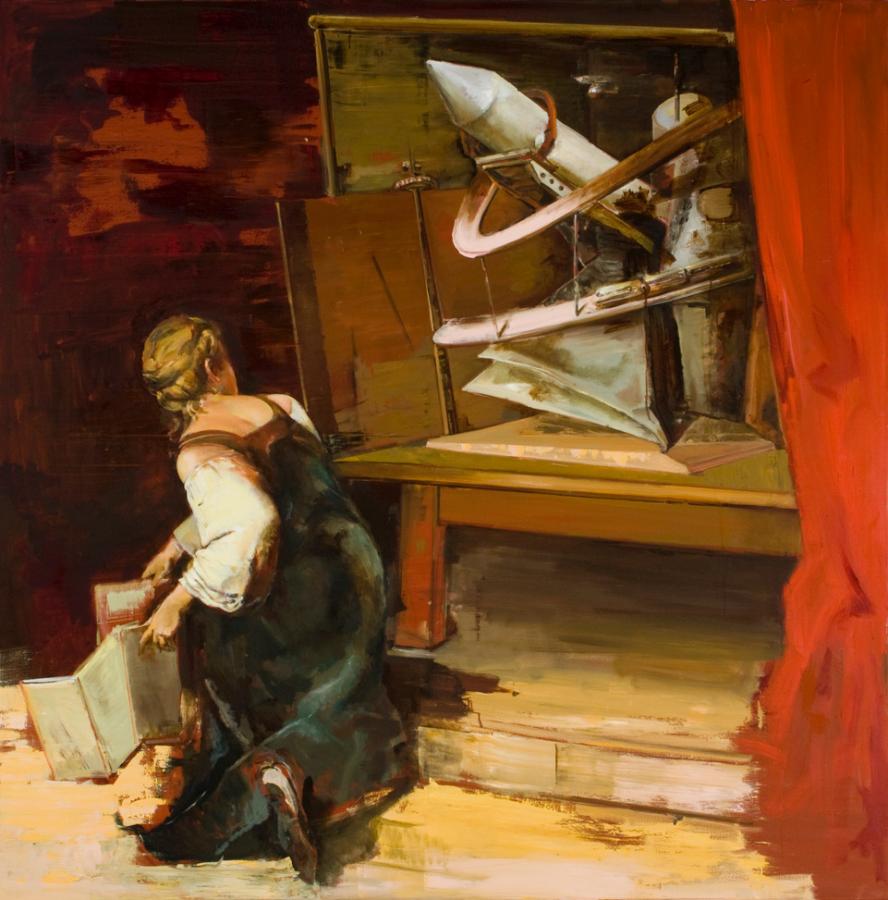
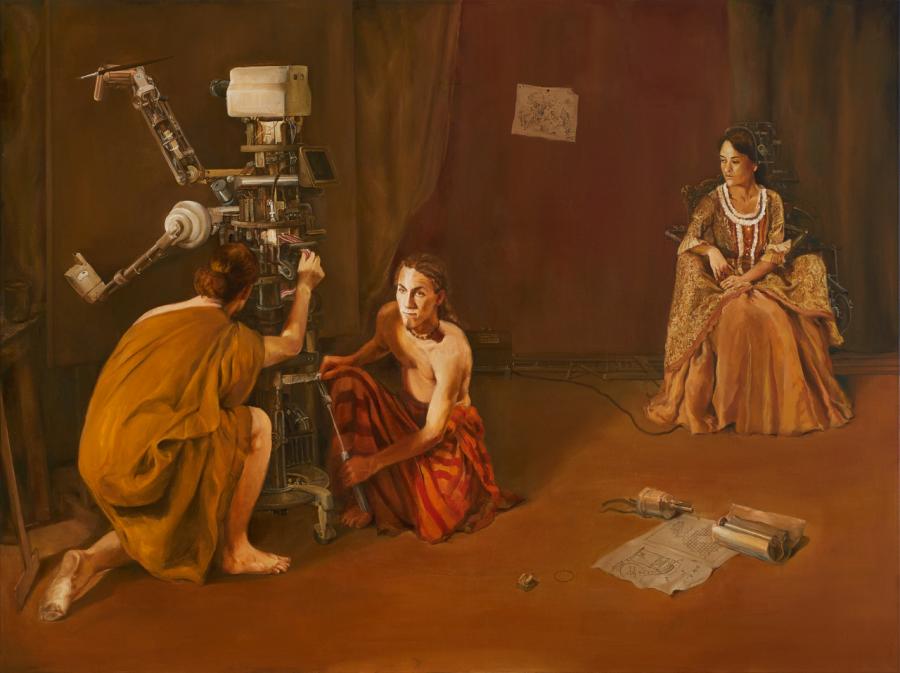
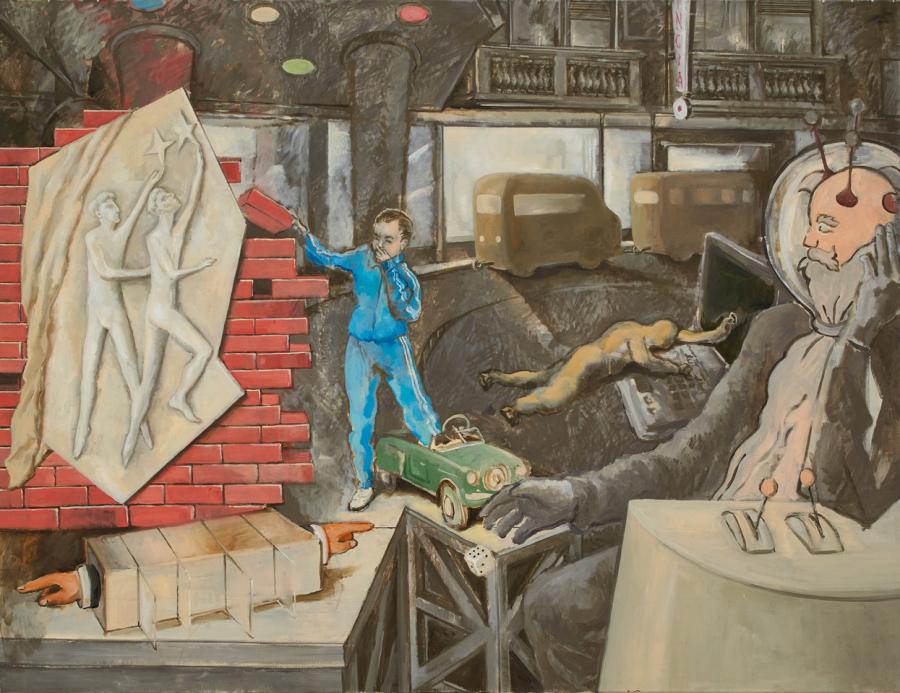
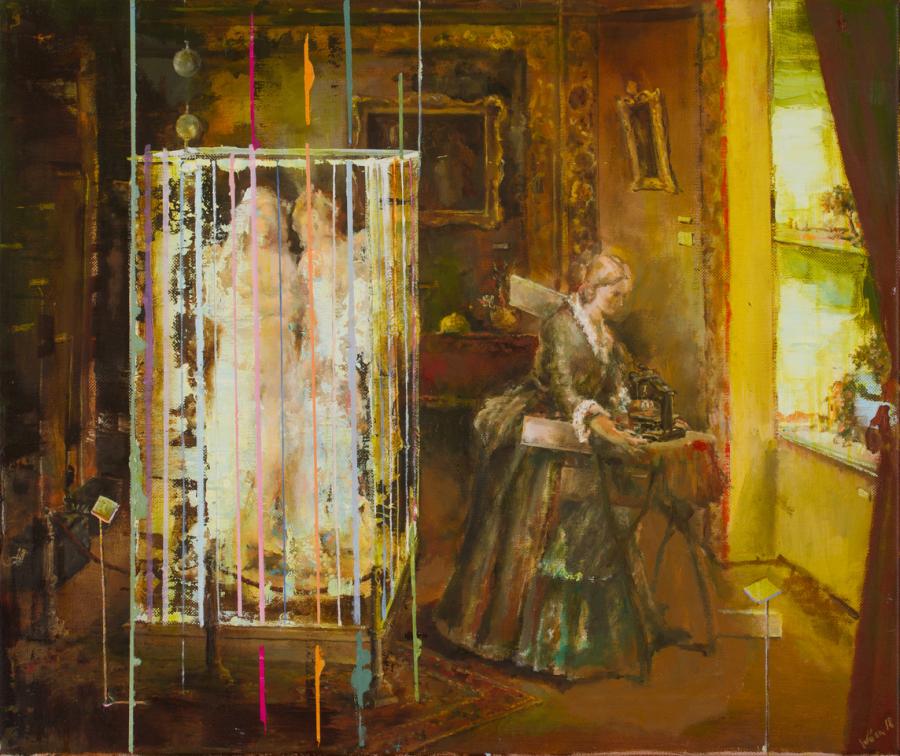
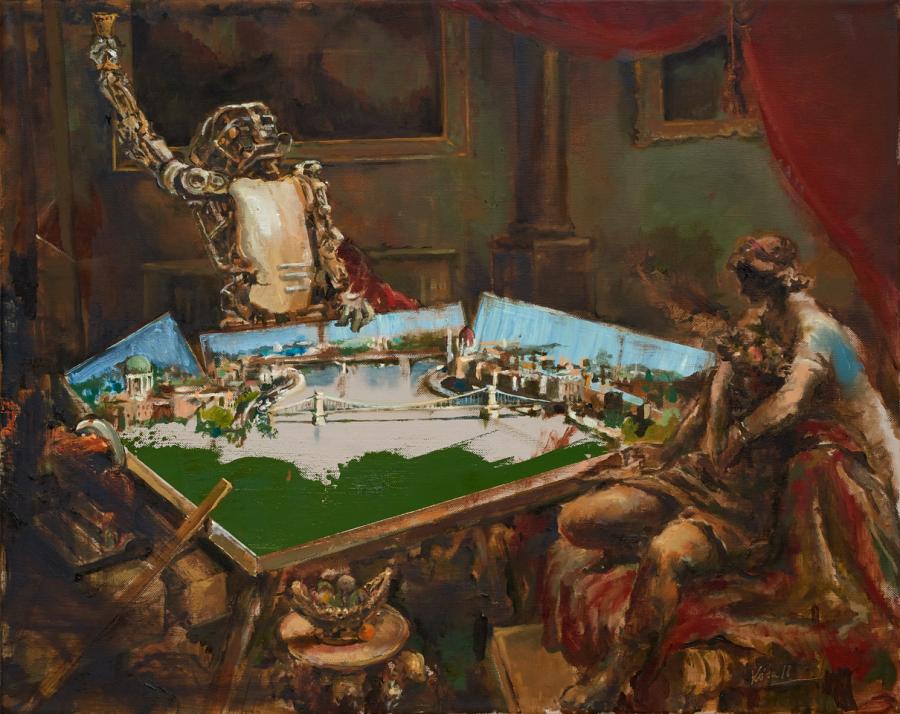
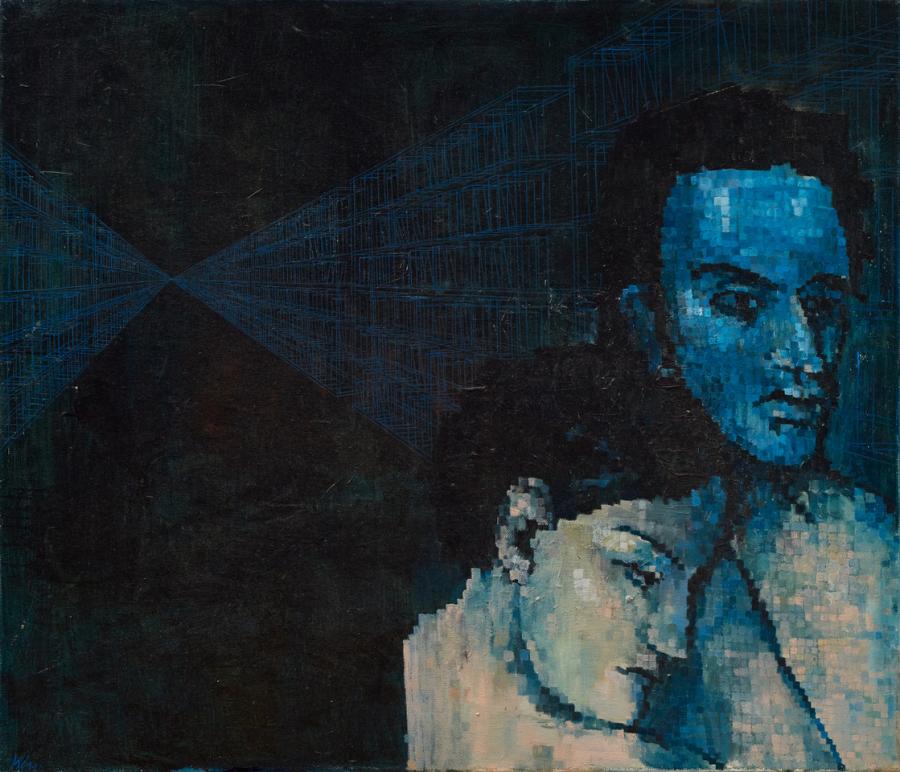
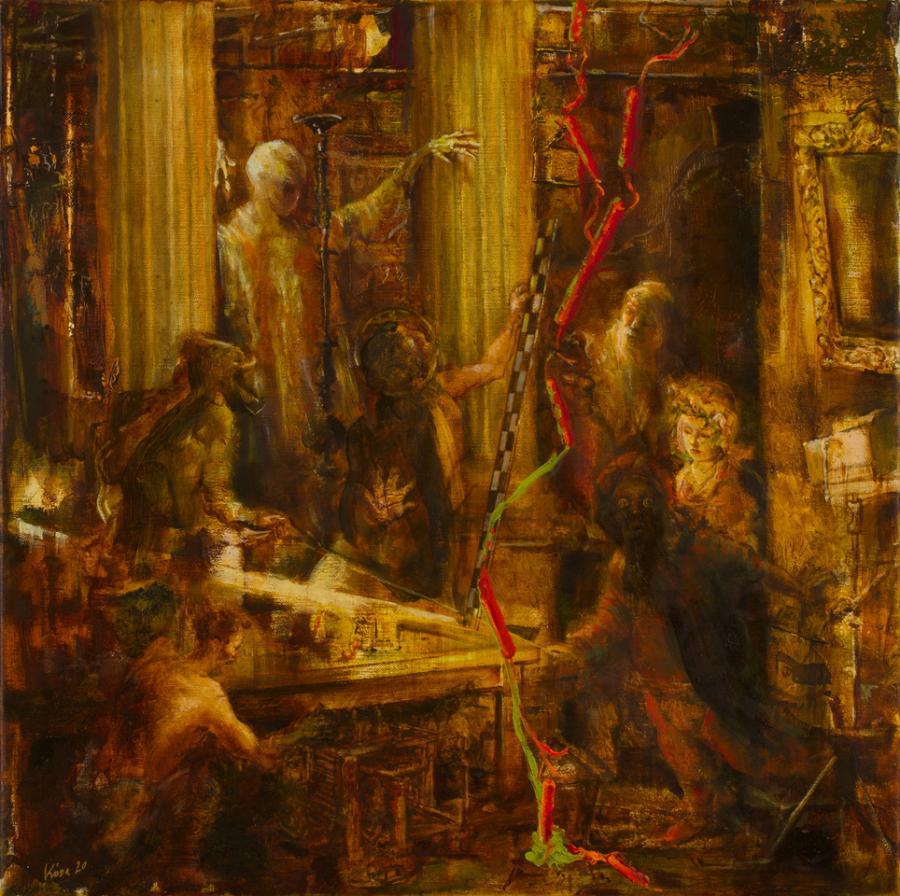
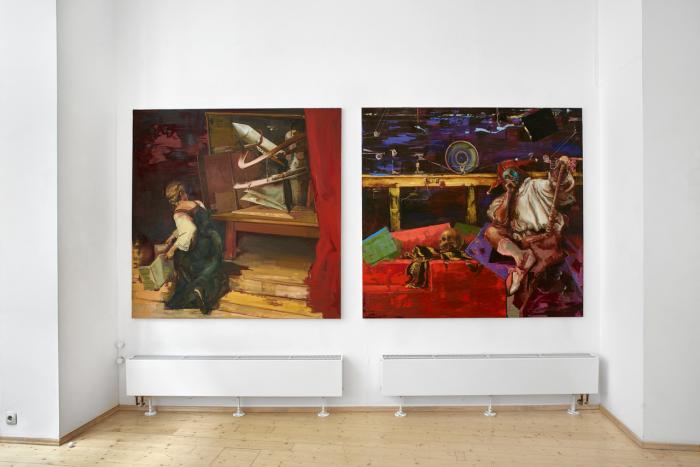
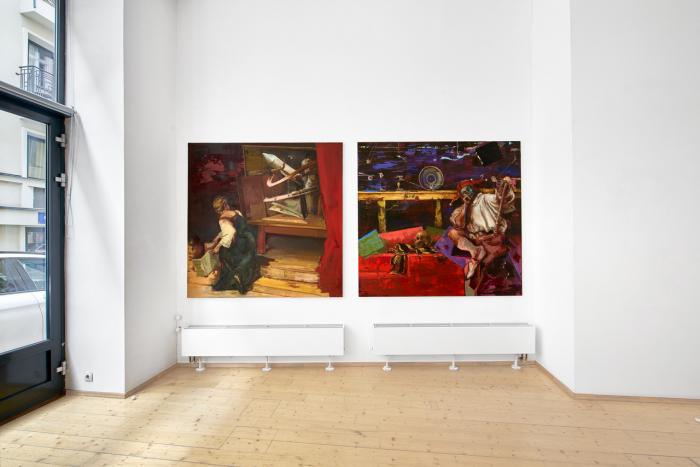
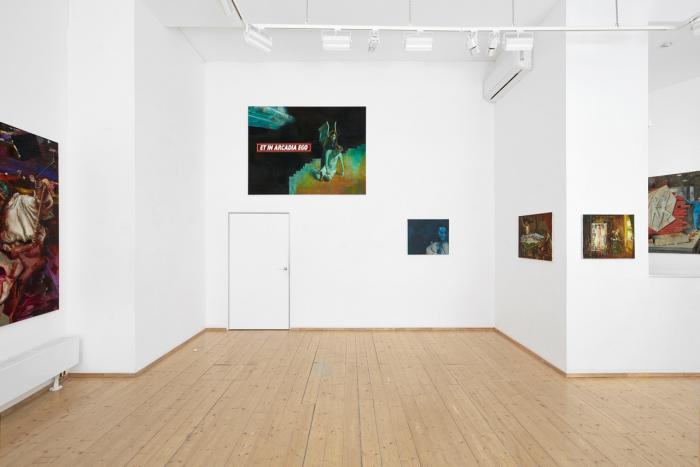
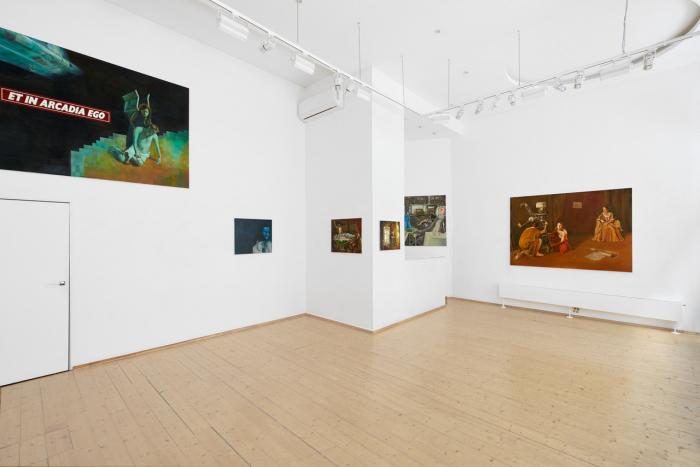
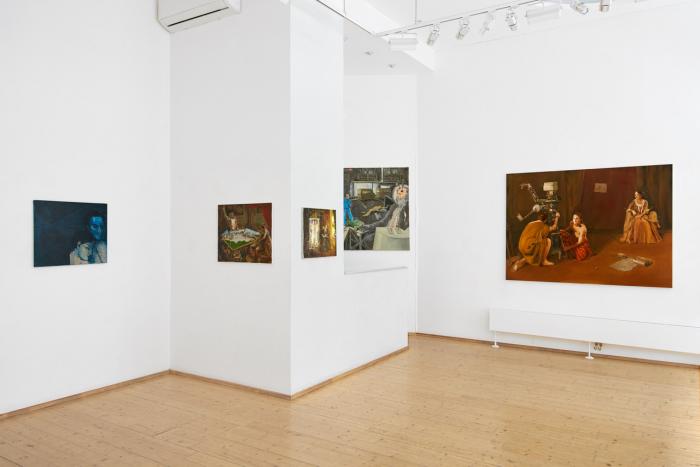
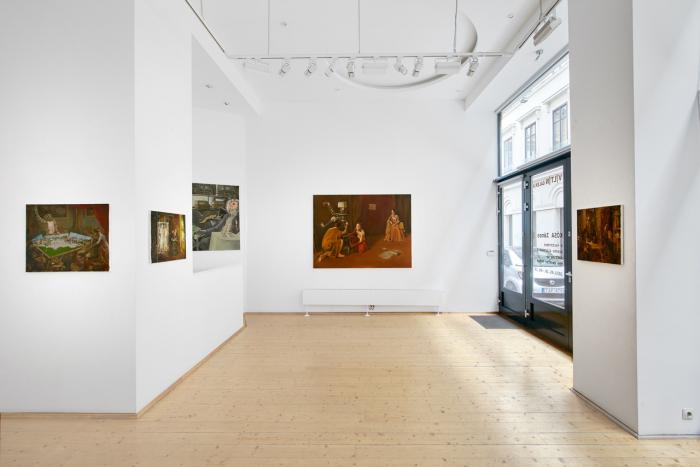
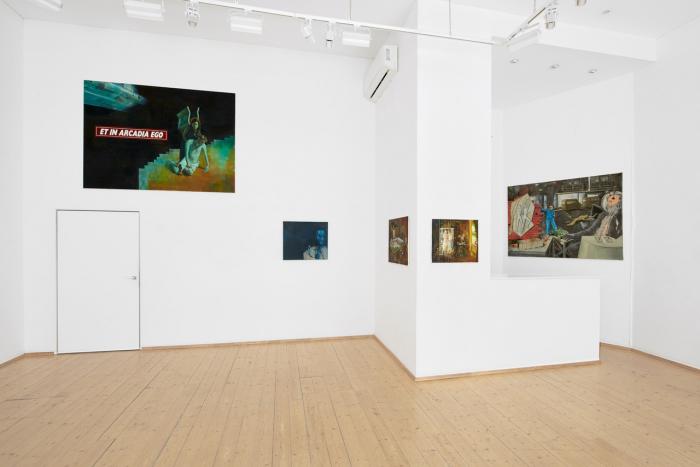
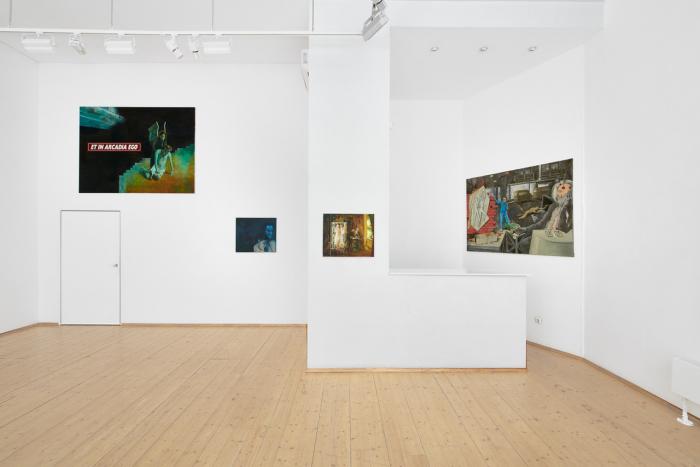
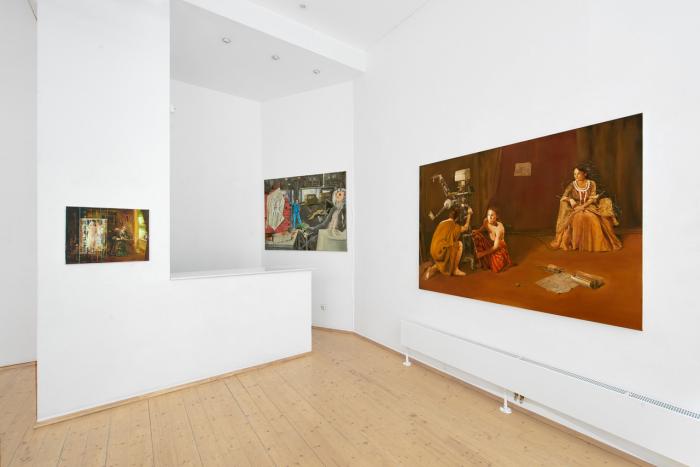
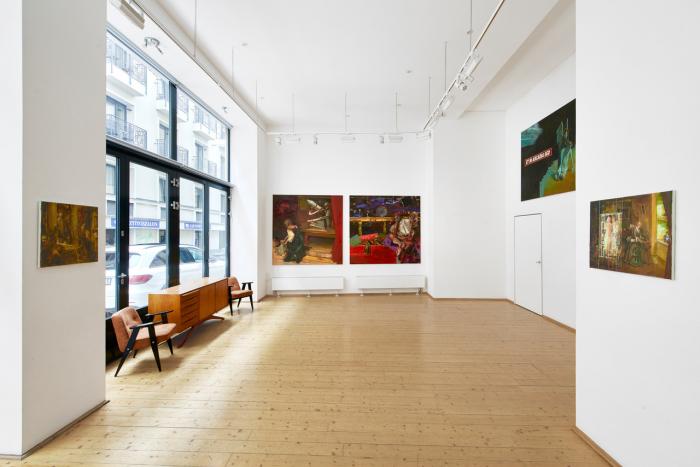
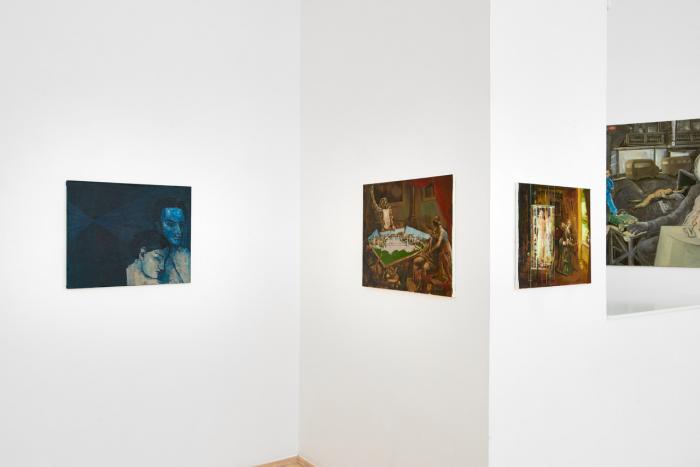
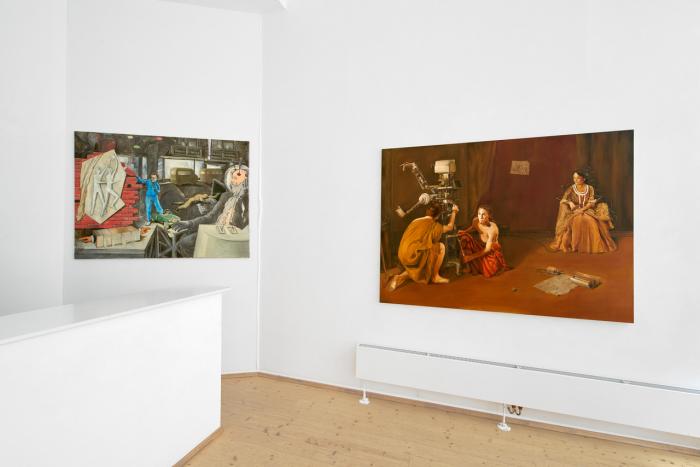
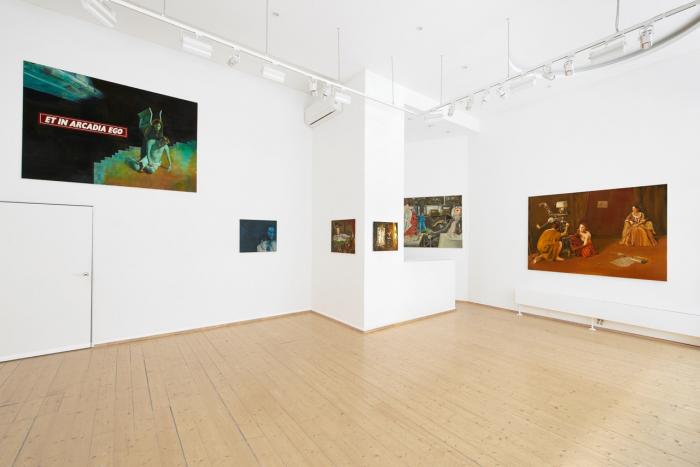
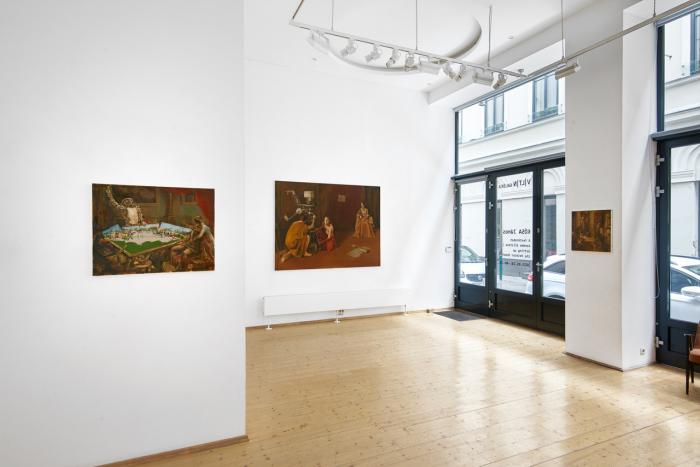
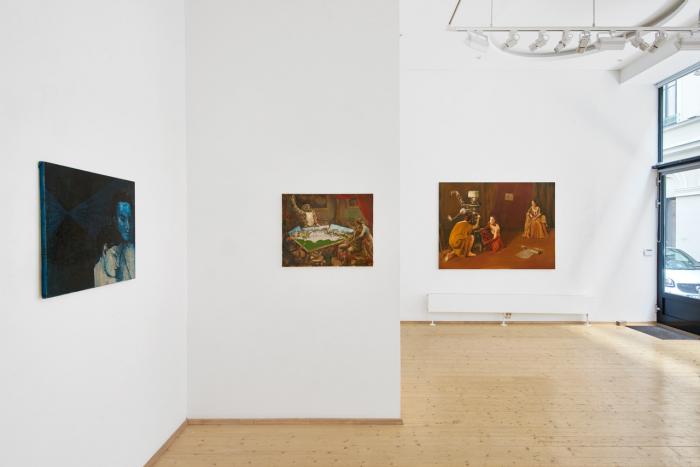
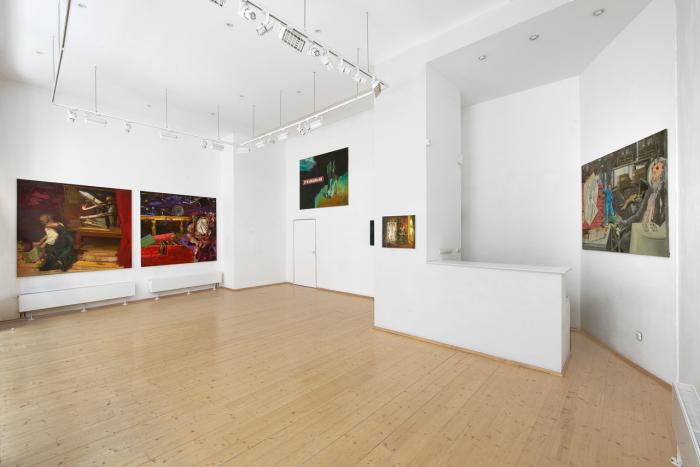
János KÓSA painter?s solo exhibition in VILTIN Gallery focuses on the connection of technology and art, this comprehensive selection presents works between 1994 and 2019. The small and large scale paintings? coherence is linked by their topic, the direct picturing of technology and humanity: from the portrait of the melancholically glazing pixelated couple above the empty library to the youngsters starting up the painter robot, or to a group of cyborgs and humans arguing above the miniature model of Budapest.
Janos KÓSA is a notable artist of his generation, his carrier started in the 90s, while his artistic practice and professorial work progressed simultaneously. At the beginning his practice, he was influenced by techno culture, wide spread computer usage, and the internet factor of the digital revolution. As a young artist, he realized, that the 80s? postmodern, transavantgarde perspective and expressivism became anachronistic. The ?sheer meagre? of computer generated electronic image intrigued the artist, meanwhile the artists were against the lo-fi but increasingly popular image of computer animation. It was intensified by the constantly amplified theories about the death of the painting by along side of newer and newer definitions. (End of Art? - Géza Perneczky, Hans Belting, Arthur C. Danto, Gianni Vattimo) The argument on technical image versus painting. For the painters it seemed that realizing the speeded-up process, the significance of time was the point and not the end or death. The static nature of the painting in the dumping of electronic and later digital still and moving images due to its substantial nature incline a pause and a kind of poise. This point opened up the way of reformation for painting. KÓSA?s interest grew towards techno culture and sci-fi literature, but it was sceptical and double. ?For a very long time, I couldn?t decide if technophobia or technophilia was the source of that era of painting, when I painted Hackers (1995-97).? This question used to mean something else then now. ?We consider hackers simple computer criminals today, but back then they were the >Zorros< of the digital age.? ? states the artist. This romantic note is interpreted with a clean painting method recalling 19th Century German romanticism, as we can see in the case of the 1999 painting, Setting up the Painter Robot.
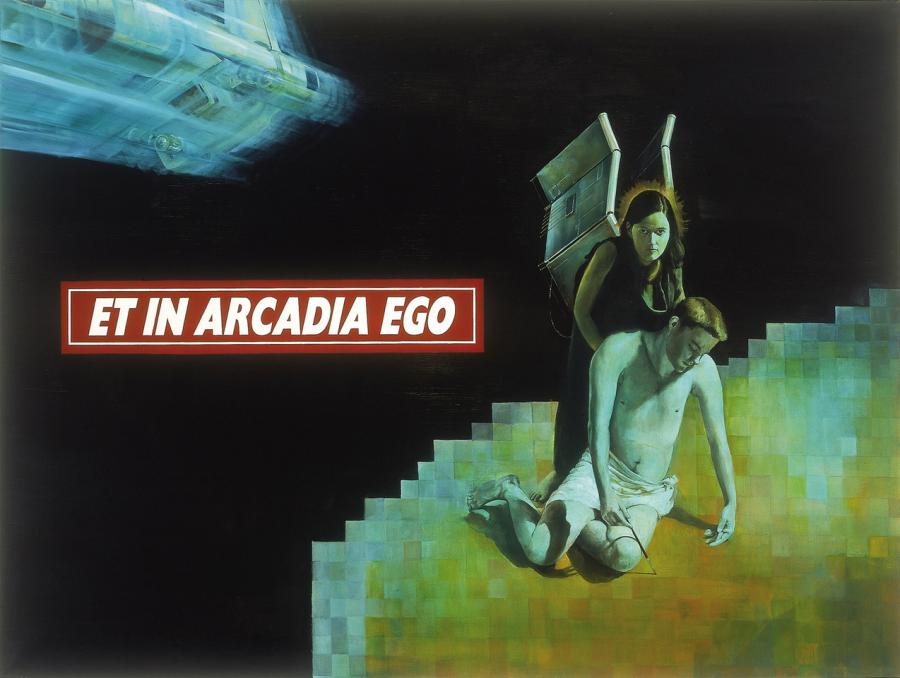
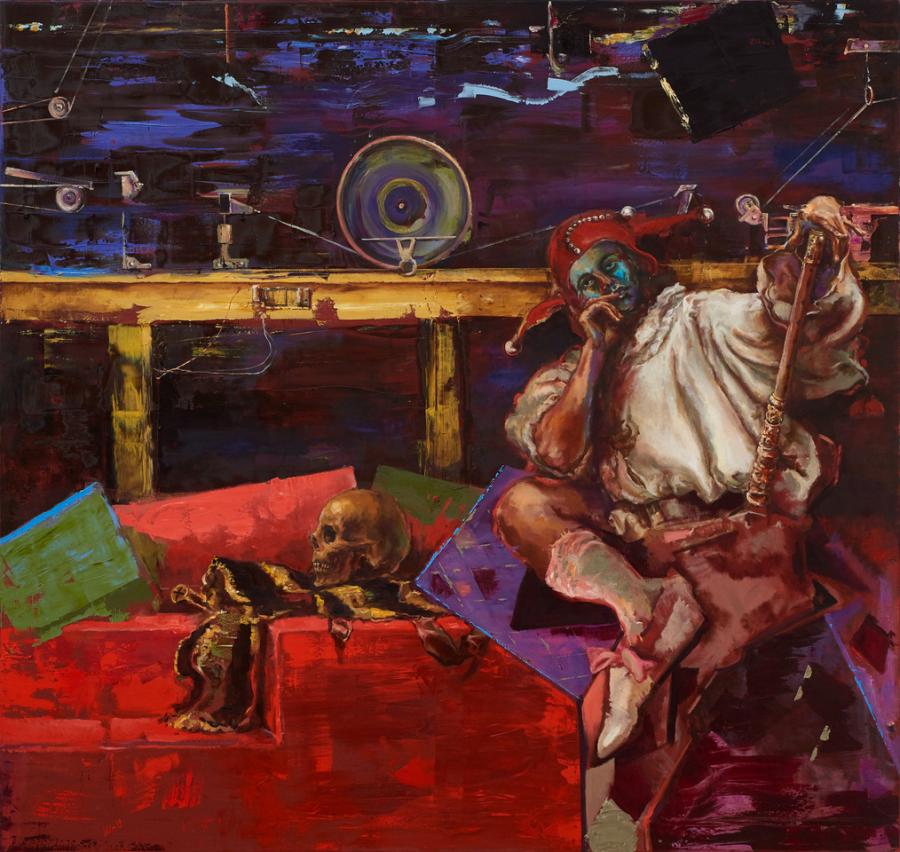
For KÓSA the power of painting is in continuity and tradition. Throughout his practice he encompassed the reminiscence of different periods of art history with care and attention: in the 90s he created paraphrases on Picasso?s blue period. From 2000s by picturing Eastern Europe and the characteristics of social realism, he was looking for their acceptance. From 2010 he returned to the analogy of 19th Century Romanticism and our time: he created dystopic and utopistic landscapes, where humans and post-human creatures live in harmony on an idealistic landscape of the future, together bearing the burden and looking for solutions against the threats of civilisation and nature. In this time the basic morphological examination of painting becomes more demonstrative: the analyzation of colour and matter, features of style and narratives. His works show a wide usage of materials, changing execution, where expressive and minimal, glazed surfaces meet. His inspiration draws from a broad history of European painting, emphasizing the unity and continuity of western canon, the intellectual heritage of Hans Makart, Jan Matejko, Mihály Munkácsy, Gyula Benczúr or Caspar David Friedrich and Claude Lorrain is apparent on his works. János KÓSA in his painting, which is not short in dramatic tension, sees beyond the outside world?s pessimism of technical development.
Tibor iski Kocsis
János KÓSA (1962, Budapest) graduated from the University of Fine Art in 1989, his professor was Lajos Sváby, between 1989 and 1992 he took part in the post gradual course at the studio of murals, where Zoltán Tölg-Molnár was his teacher. Since 1999 he is a lecturer at the University of Fine Art, between 2012 and 2015 he was the head of the Fine Art Department, and university professor from 2015. He received his DLA in 2008 at the University?s Doctorial School. From 1993 until 1996 he received the Derkovits Scholarship, in 1994 the Barcsay Award and in 1998 the Scholarship of the Hungarian Academy of Rome. In 2014 he received the Munkácsy Award. His works can be found in numerous private collections and well as in the collections of the Hungarian National Gallery, ICA-D, King St. Stephen Museum in Székesfehérvár and the Raiffeisen Bank. His works were arranged into monographs and published in multiple journals.