White noise | Patrícia KALICZKA
'Three years ago around half past eight I was on the first floor of a building estate in Újpalota when sober, I felt a thrill of revelation imagining myself experiencing the fourth dimension. I imagined everything happening simultaneously: at a certain corner of the space the appearance of forms in the past, present and future are synchronous, looming on each other. Looking out the window you see carriages going around the yurts in the park under dinosaurs' feet. The snow, the bone remains and the grass of the steppe crackle under their feet at once, while the Triassic ocean waves and the wind blows sand in Thomas Mann's face. All space segments contain information about the whole like a hologram.'
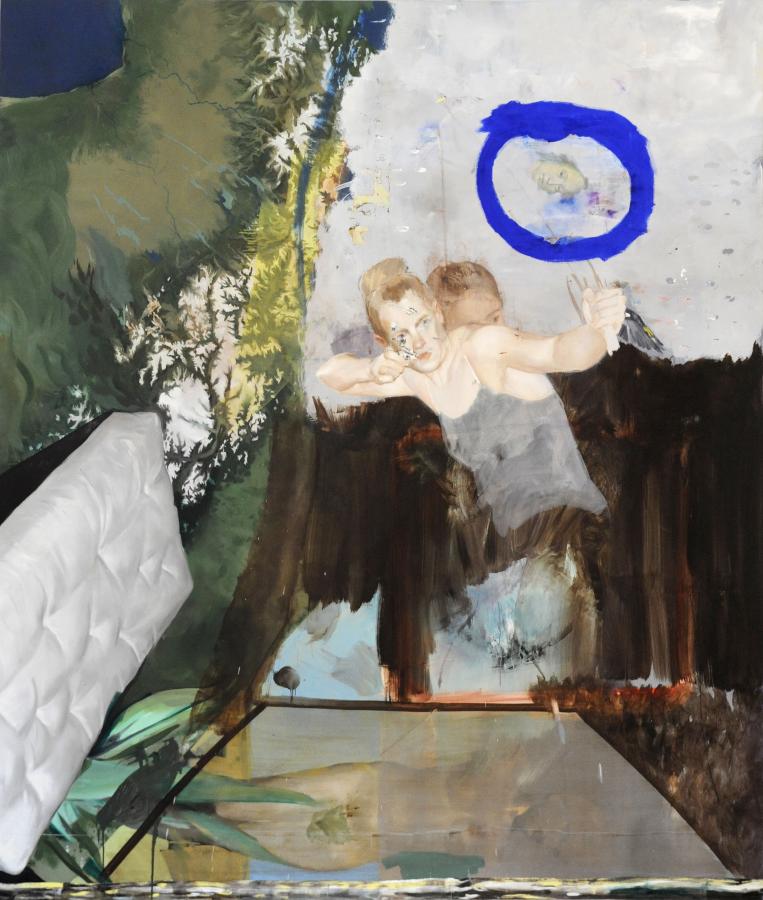
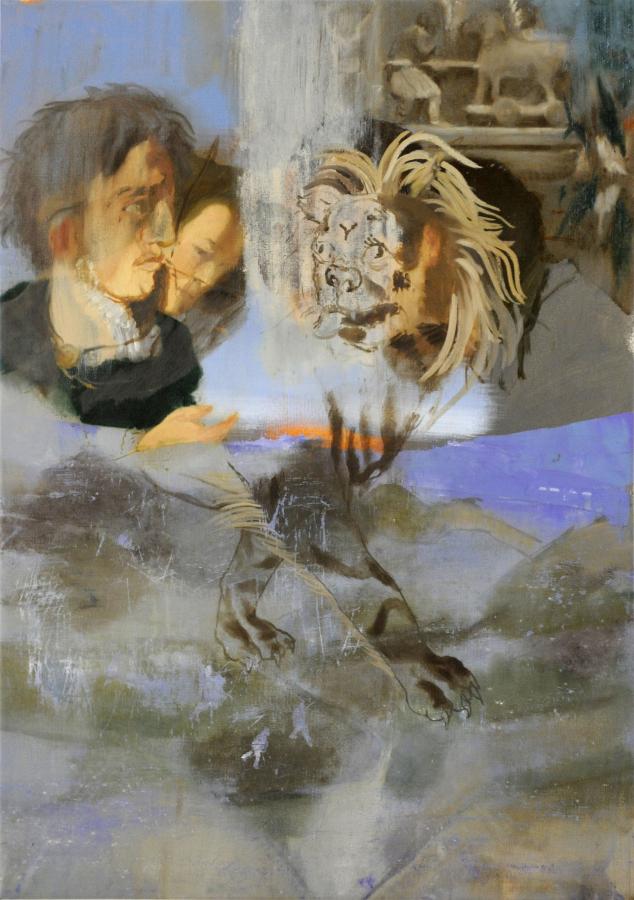
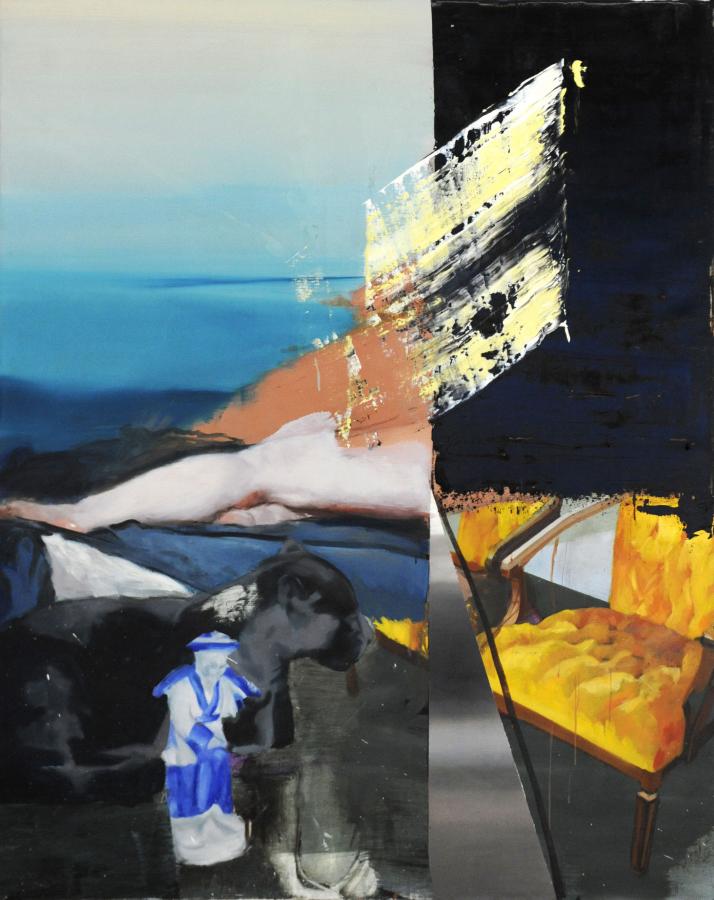
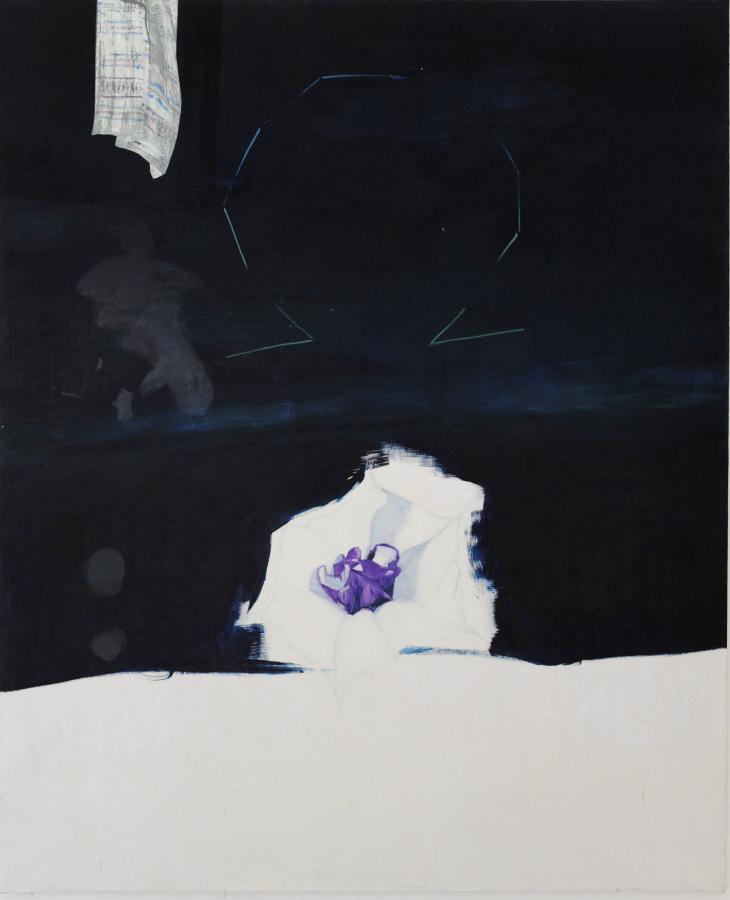
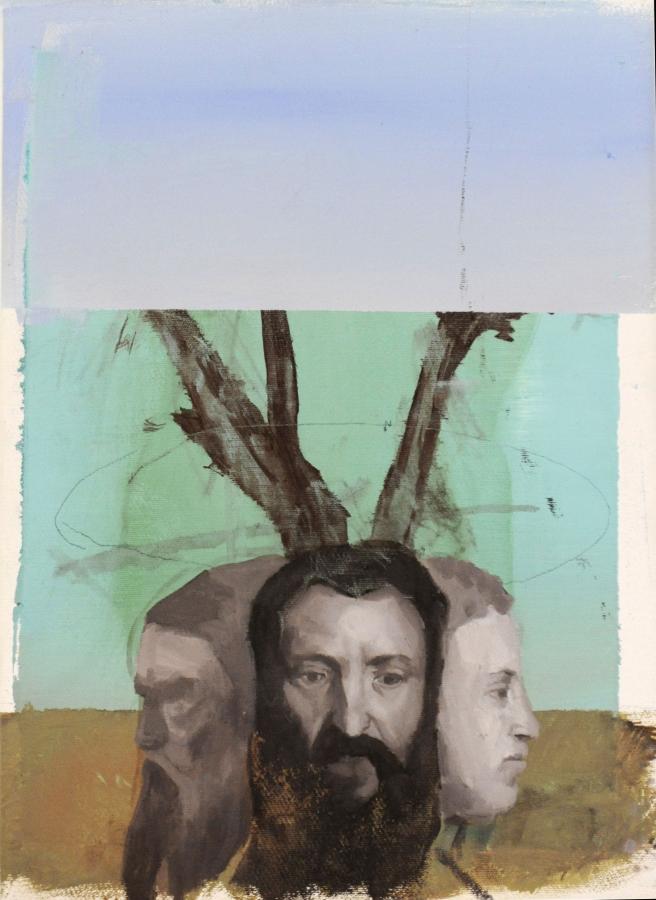
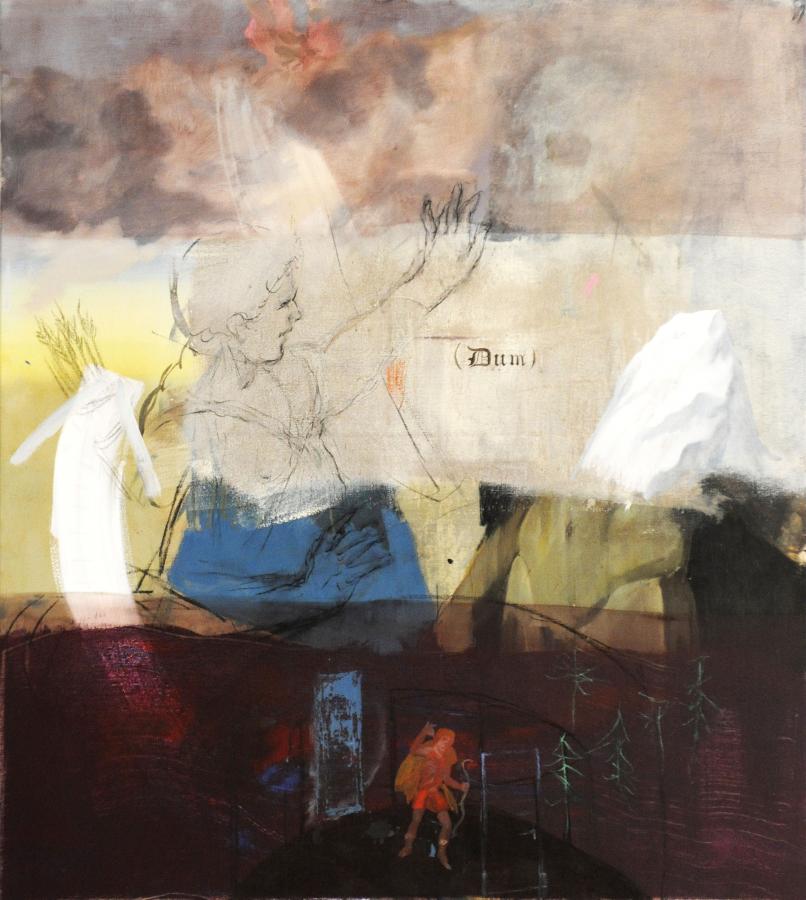
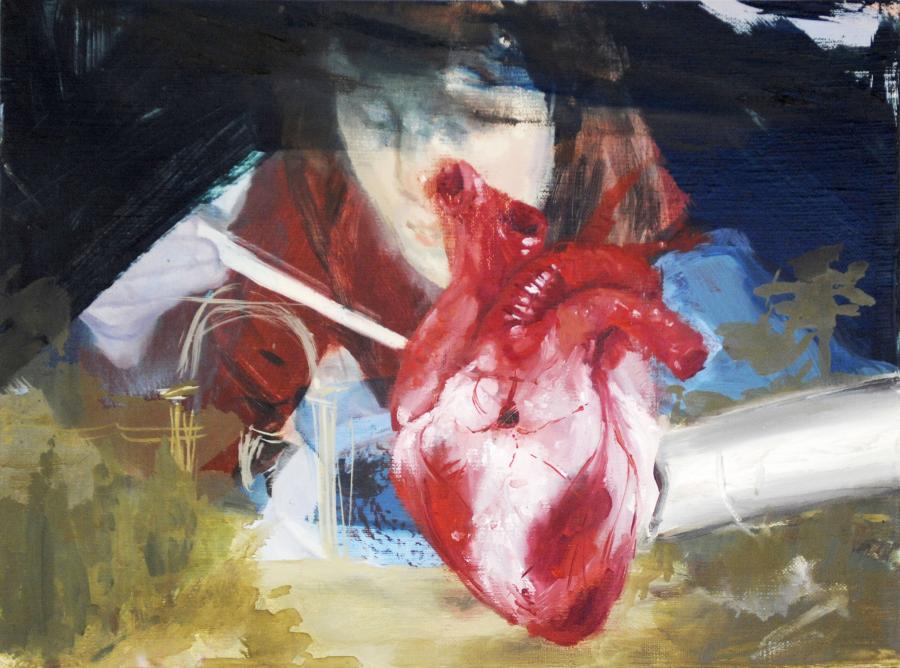
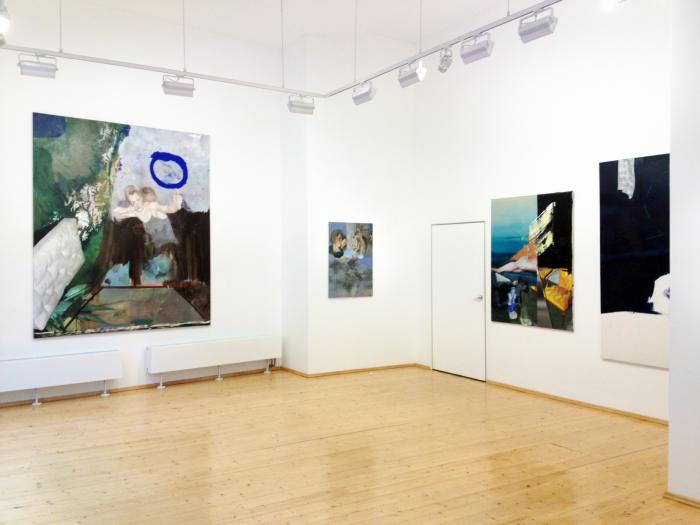
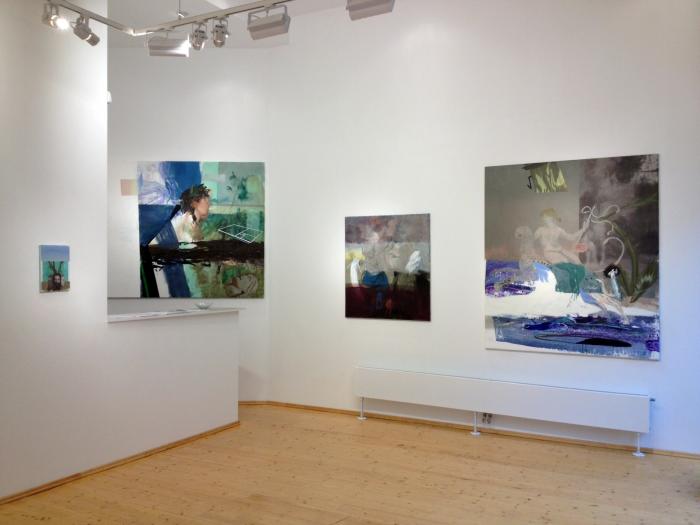
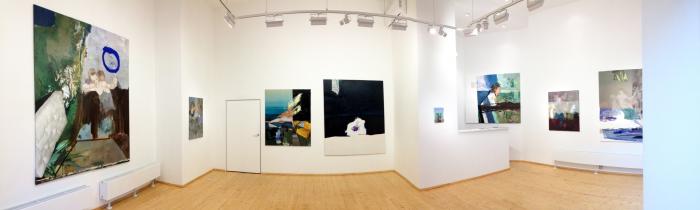
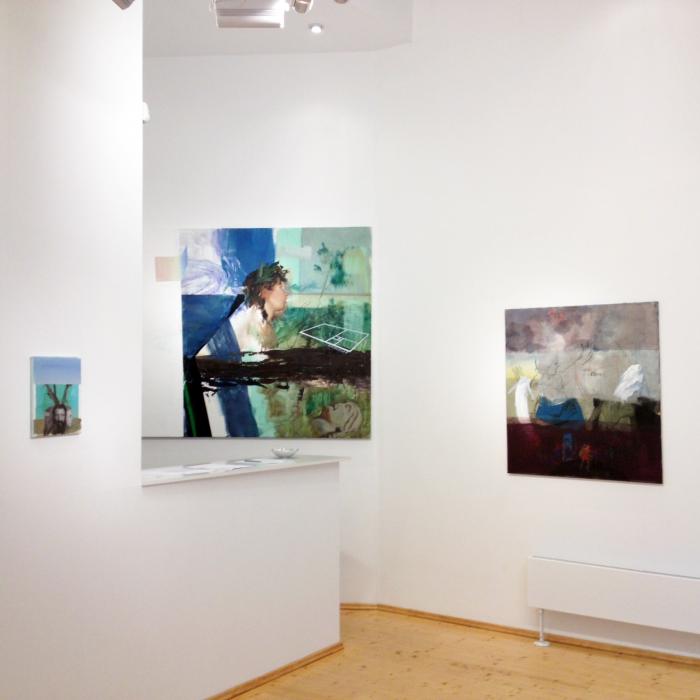
The paintings of Patrícia KALICZKA reflect on the permeability of the world's spatial and temporal situation. The sometimes glazy or compact picture plains, objects or figures are details of the same space but various times. The picture itself is an attempt to catch the substrate?s constant spatial flow by painterly tools. The substrate of an imperial leather armchair turns into dust, ocean current, dog hair, china figurine, mural fragment and white line. The piled up layers of paint can be interpreted as a certain space segment which carries different information depending on the time when it is manifested.
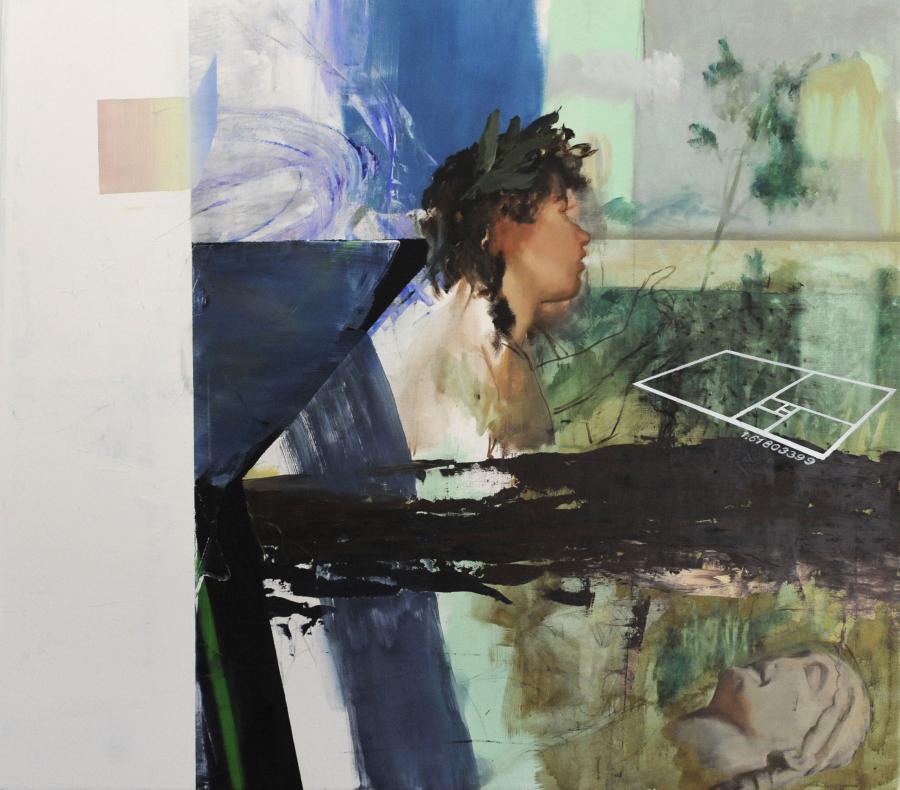
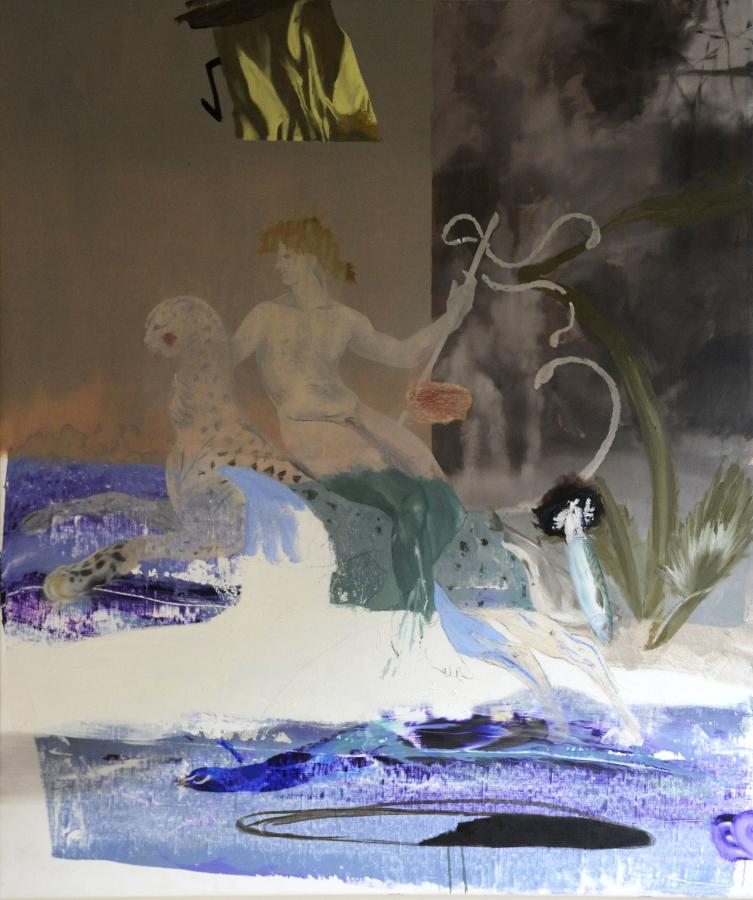
White noise is a sound that can be found all over the Universe. It holds all the frequencies to the same extent and with the same strength. To our ears, the infinite variety of differing qualities equalizes in a hollow but at the same time sharp whizz. Similar to this, there?s no hierarchical relationship among the different layers and elements. There's a lack of focal point and any other approach that helps the linear narrative. Instead, there is co-ordination: on the painting Apollo finds the Golden Ratio the replica of the Apollo-head study has the same significance as the upper corner's pallid tree, the Golden Ratio diagram or the white stripe occupying the one fifth of the painting. Like The second Metamorphoses of the Spirit of Alexander the Great, there?s no difference among the outlined transparent charcoal lion, the tripling woman portrait of Delacroix and the background's reed and waterfall. A timeless visual multicultural experience is born where the artistic elements, the abstraction and figure, foreground and background, line and colour spots become co-ordinated and equivalent.
Patrícia KALICZKA was born in 1988 in Balassagyarmat, Hungary. She graduated from the Painting Department of the Hungarian University of Fine Arts in 2013. Besides the Unicredit Scholarship she also won the Esterházy Art Prize and the Béla Gruber Prize in the very same year. She received the Gyula Derkovits Scholarship in 2014.