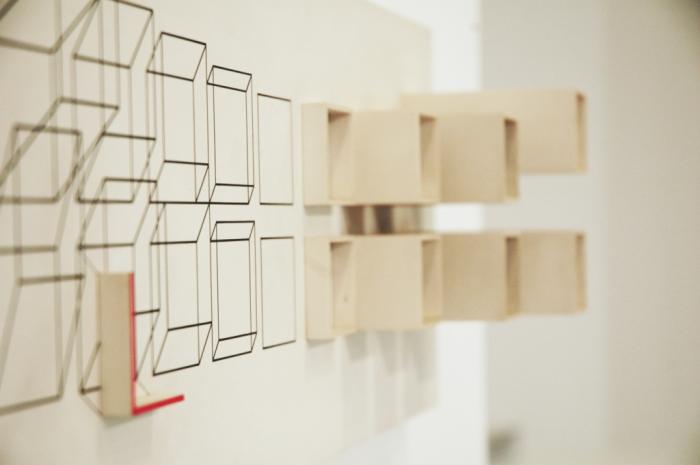
Time-geometries | Attila KOVÁCS
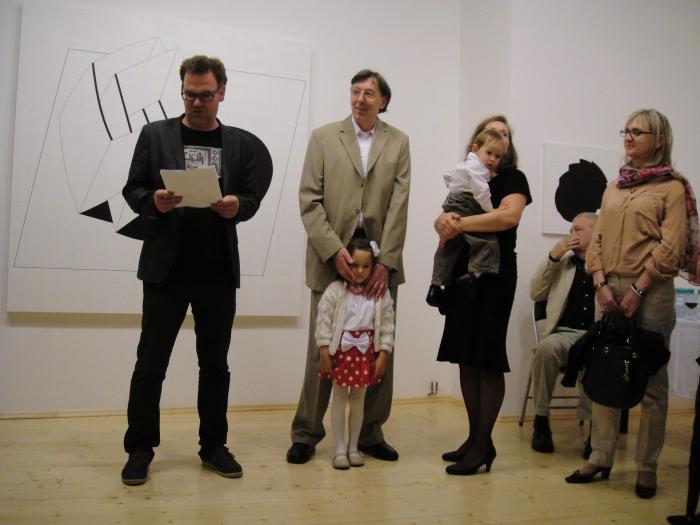
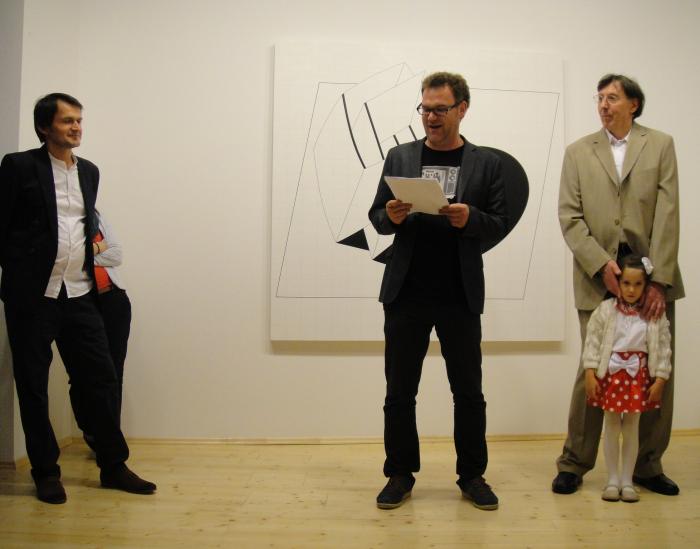
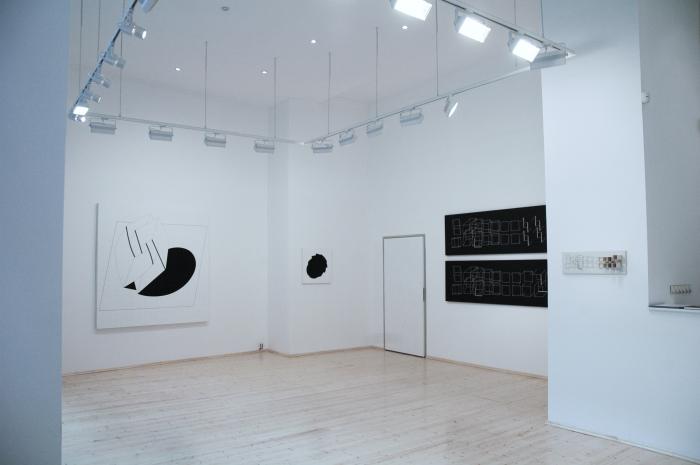
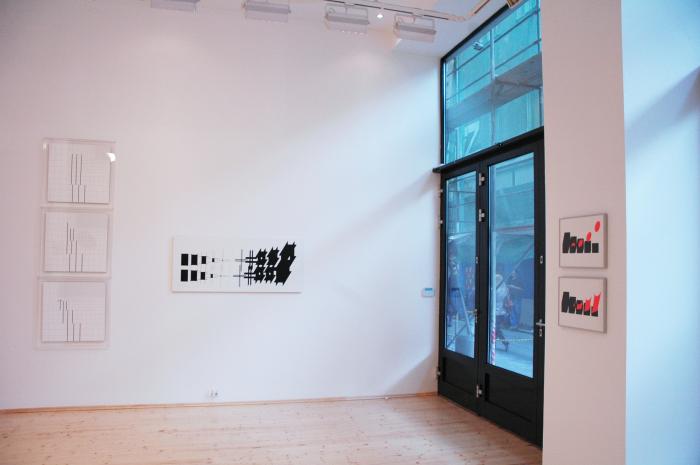
VILTIN Gallery opens its seventh exhibition season at its new location on Vasvári Pál Street in Budapest's arts district, in the neighbourhood of many museums, theatres and galleries. For this exceptional occasion we present an extensive and representative selection of Attila KOVÁCS' art, titled TIME-GEOMETRIES. The works, made between 1968 and 1998, are outstanding pieces from the artist's most significant series.
Attila KOVÁCS was born in 1938 in Budapest. He emigrated to West-Germany in 1964 and graduated from the Department of Art at the Saatliche Akademie der Bildenen Künste in 1970. KOVÁCS moved to Cologne in 1972, where he lived and worked until 2010. After 1984, he regularly returned to Budapest, and had a retrospective exhibition at the Kunsthalle Budapest in 1995. Currently he lives and works in Budapest.
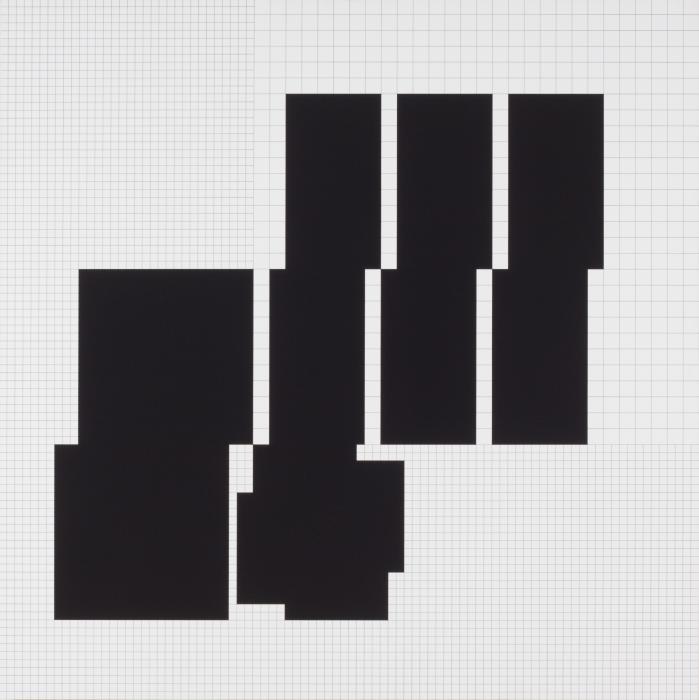
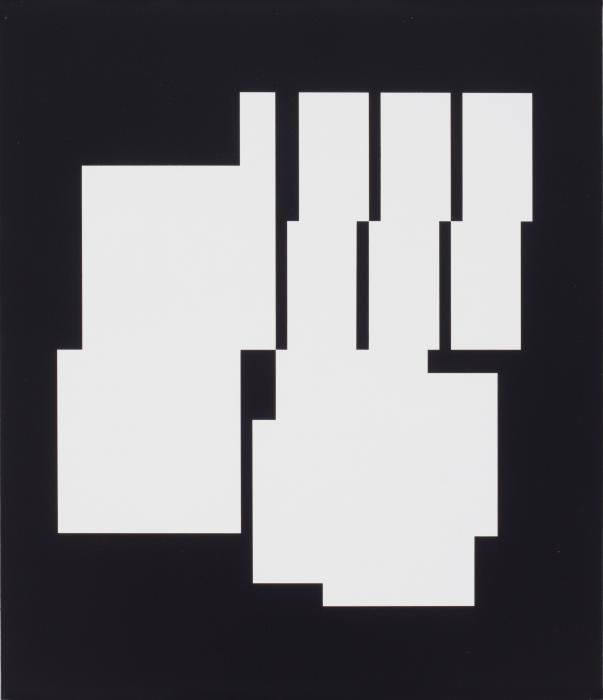
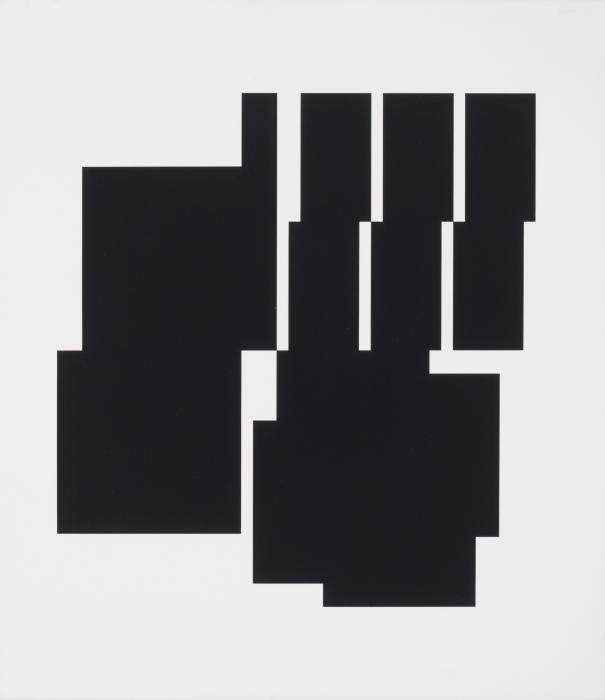
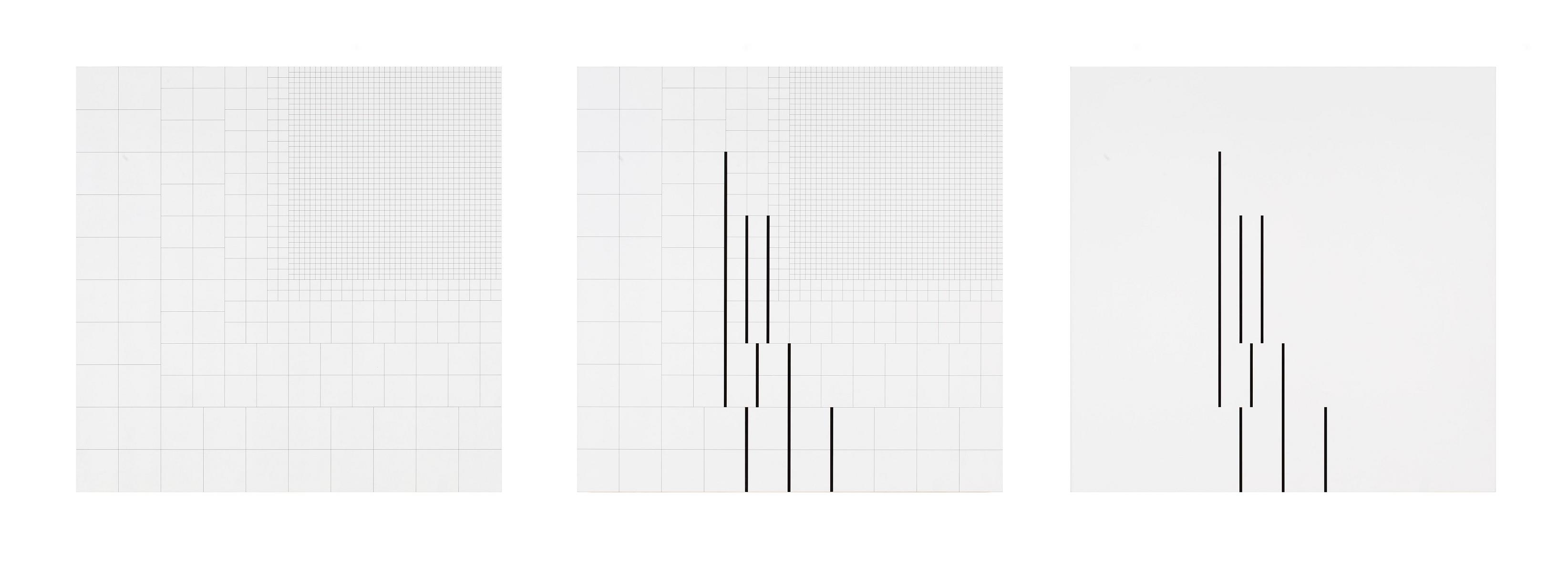
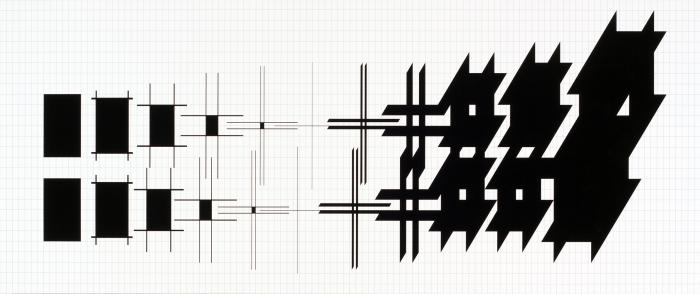
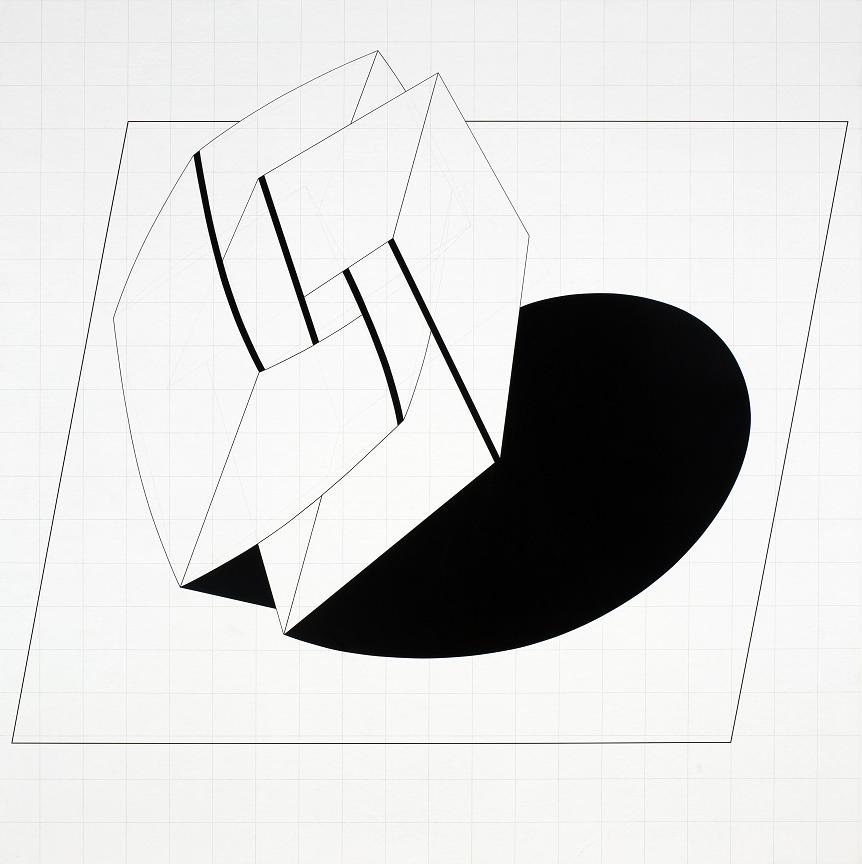
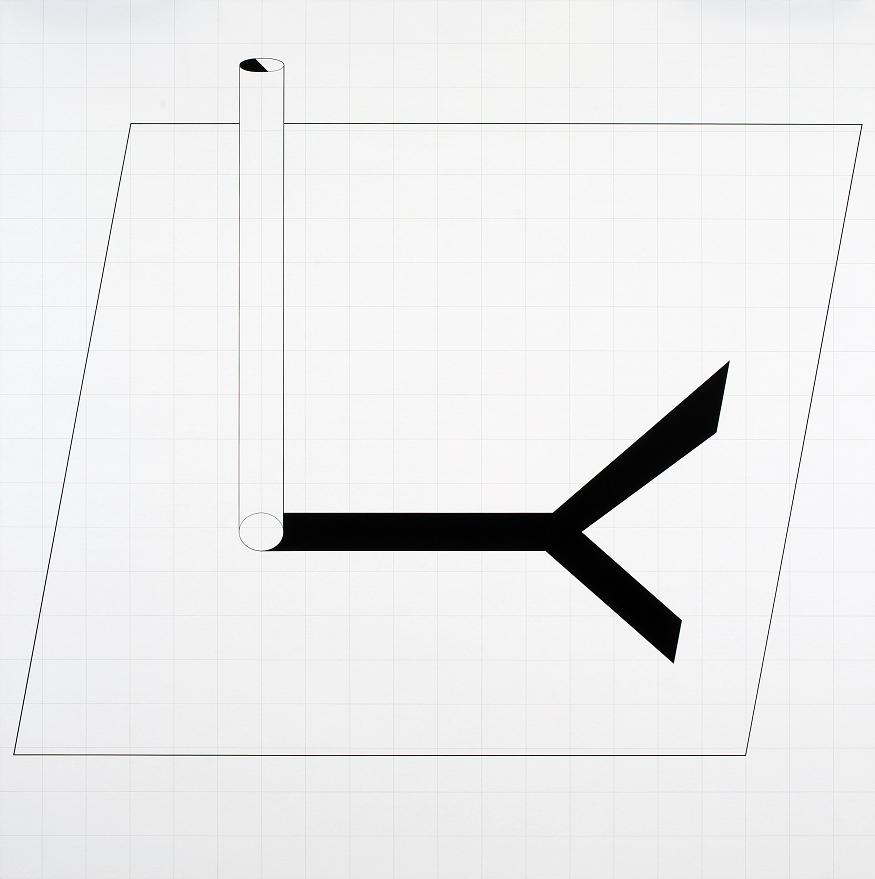
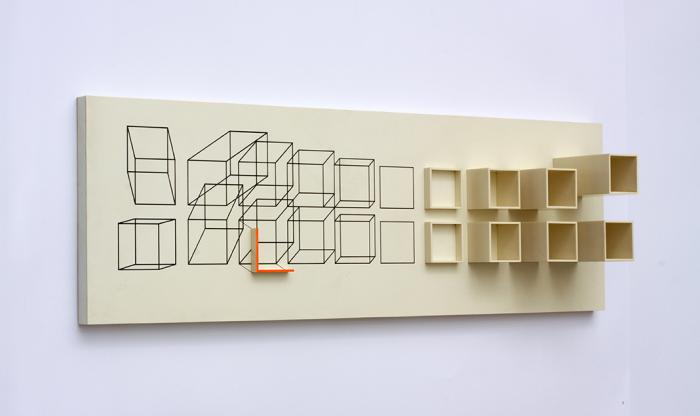
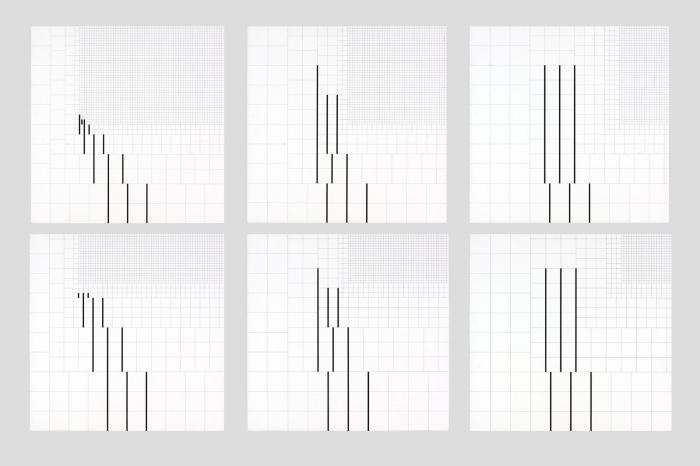
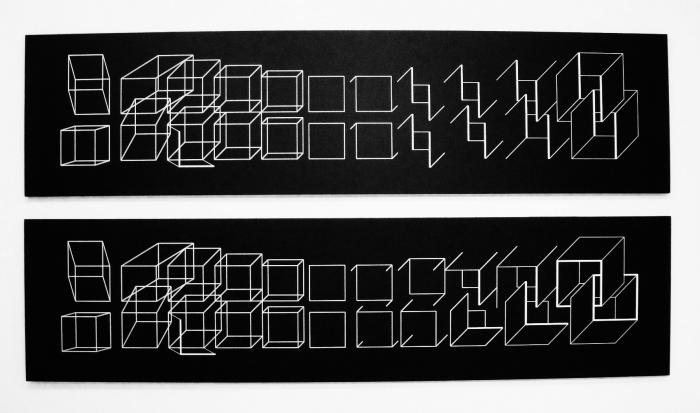
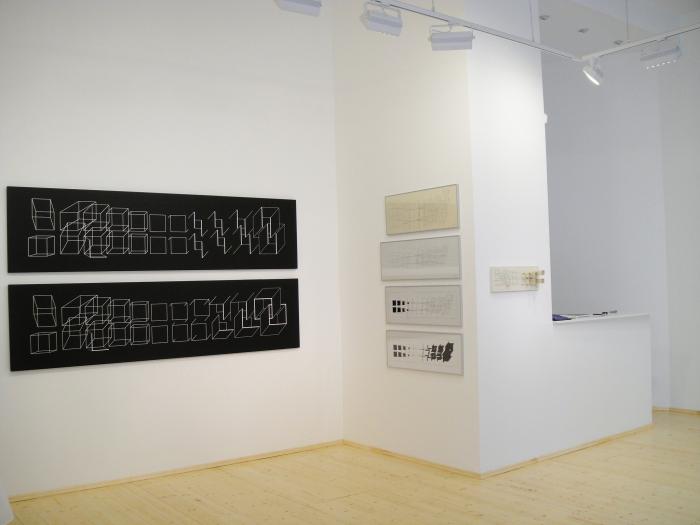
Starting from 1958, and later between 1964 and 1970, he created a unique artistic language that he named 'Frame of Reference and Statuesque Transmutation'. In this series, he built his own system of non-Euclidean sequential geometric abstractions by mathematical coordinates along an YXZ time axis. This infinitely variable series is defined by the artist in 'The Function Table of Relativisation and Synthetisation of Visual Structures' (1973-76). The selected sequences were executed on canvas, mounted on wooden board or paper.
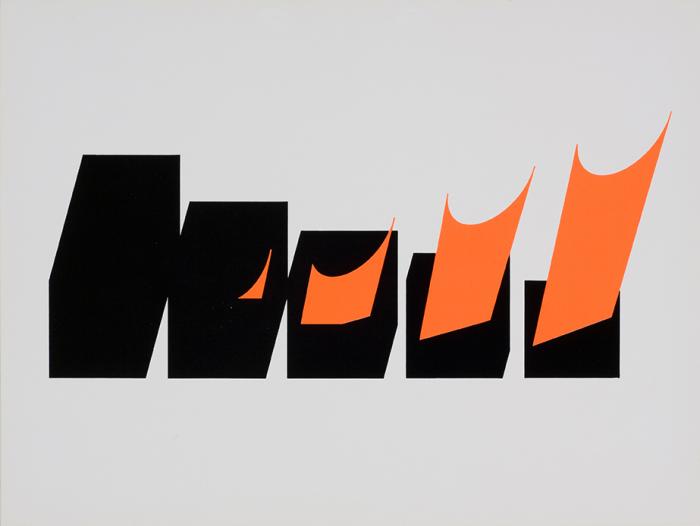
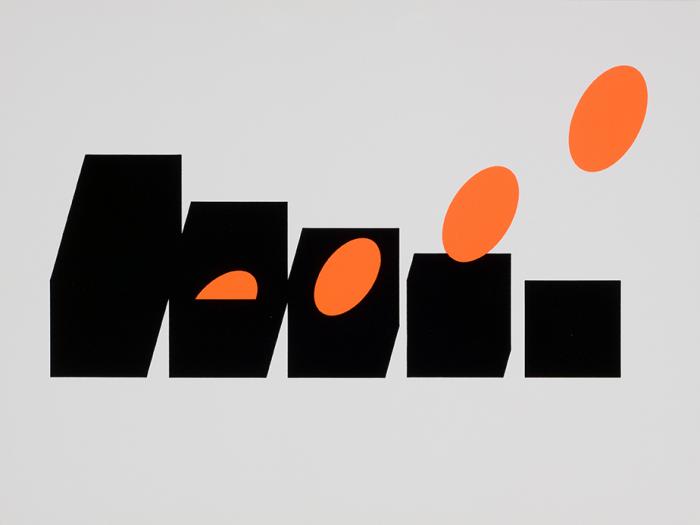
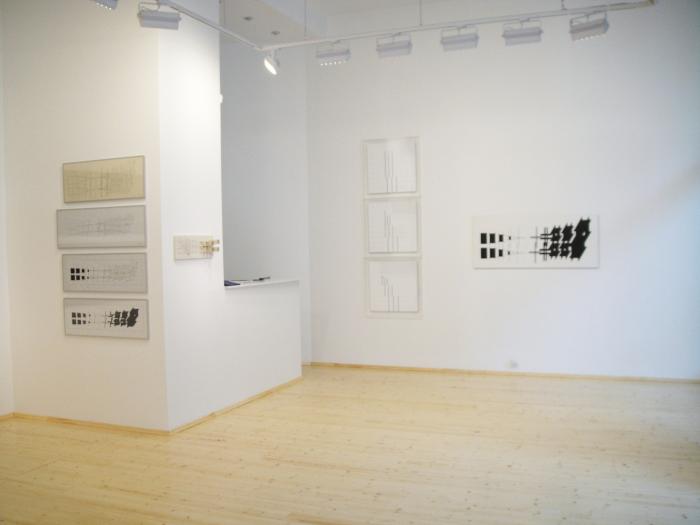
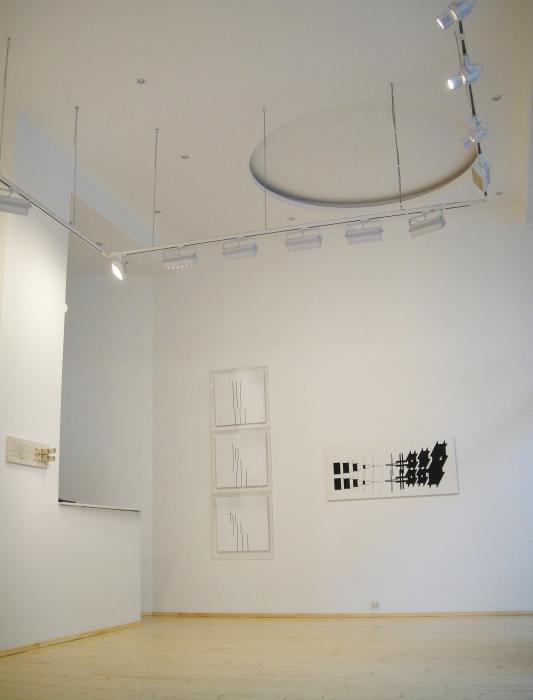
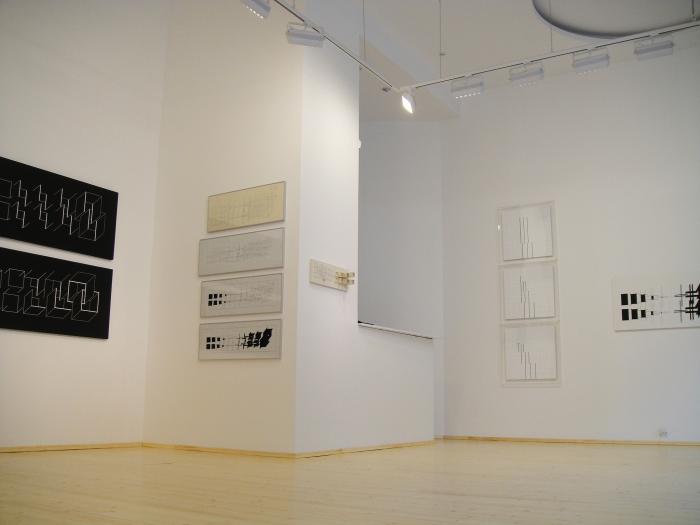
His works are usually realized on two-dimensional levels. Other times they start out on one plane, then following the mathematically fixed rhythm of sequential movement, build into spatial form and create a kind of geometric frieze on the wall. The works of Attila KOVÁCS are born in an emblematic visual world, their geometric symbol system and their purity are the accomplishments of the artist's almost superhuman dexterity. All the panels of the artist - similar to icons - are unique paintings on carriers using multi-layered foundations. His works on paper include ink and pencil drawings. The current exhibition presents a selection of graphic art: silkscreens from the late 60s using some of the most exciting colouring method of the time, as Attila KOVÁCS was among the first pioneers who worked with the just invented luminous paint.
The oeuvre of Attila KOVÁCS is parallel with the oeuvre of significant artists of minimal and concept art - like Sol LeWitt, Donald Judd, Larry Bell, or Ad Reinhardt. Although the formal resemblances are obvious, his concept differs. While minimal art is based on reduction, the visual media concept developed by KOVÁCS in the late 1960s shows an endless, expansive visual world, and thus is rather parallel with conceptual art. According to Henry Flynt (a theorist of concept art), "Concept art" is first of all an art of which the material is "concepts," as the material of for ex. music is sound.' Flynt declared in 1961 that concept art had nothing to do with pre-20th century traditional art, but was more closely related, or tradition bound to mathematics. In KOVÁCS' art, the musical sounds are replaced by thousands of mathematical equations, and each of them serves as a base for a variation of visual artworks. Using his symbol system, he elaborated 2025 variations of the square structure of Josef Albers - the pioneer of minimal art - in 1974-75, that was exhibited in 1976 in the Ludwig Museum, Cologne, and later, another comprehensive series was exhibited in 1977 at documenta 6, in Kassel, Germany.
His artwork titled 'Periodically-Vertically Structured Horizontal Processes', a series of 14 sequential drawings made in 1964, is the first sequential artwork in the world according to German art historical researches, and was most recently exhibited in the Neues Museum, Museum für Kunst und Design in Nürnberg.
The artworks of Attila KOVÁCS are displayed in major museums and private collections all over the world, from the United States to Japan.