Előd ORBÁN | Empty Places
VILTIN Gallery presents the works of Előd ORBÁN in a solo show for the first time.
Hans Zimmer, the German composer released the soundtrack of the movie Inceptionin 2010. Christopher Nolan's cultic sci-fi is a road movie between reality and dreaming. The 'architect' furnishes the reflection of the dream and space in a very detailed and realistic manner, which doesn't bear its real and full value. It has existing buildings, but doesn't use entire spaces in his dreamlike building operations. This way the spectator of the digital age faces the metaphysical spaces of Giorgio de Chirico's paintings' atmospheres in the movie. The endless spaces of the humanless cities 'are painted meticulously, every element of the image is recognizable, can be identified as objects, and yet: there is no story, it can not be set into any narrative, since it is not part of time' - writes László Földényi F. about the paintings of De Chirico in his book 'Spaces of lively death'. The most well-known track of Inception is Time, which was spotlighted due to the pandemic of 2020. The composer-duo Hans Zimmer-Alan Walker's composition this time was the musical illustration of the trauma reaching across generations' imagery. Its music video shows cities during lockdown, confronting us with the not so unimaginable reality of a world after humans' melancholy. Yet in the video there is light coming through the windows of the houses lining up the empty streets, which suggest time passing be, creating the idea of temporality and shines as the hope of the future. Therefore, three generations of the audience can see audio and visual syntheses of constant tension
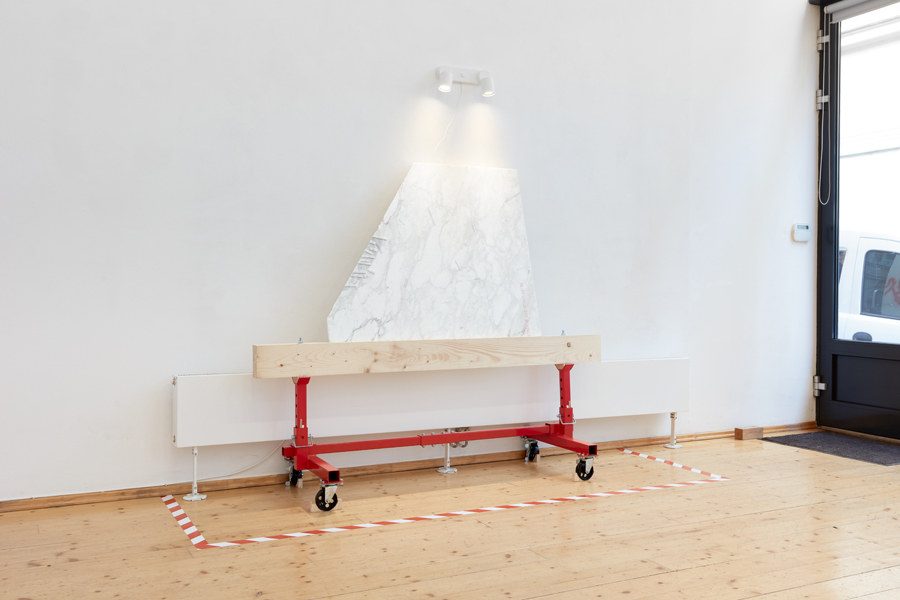
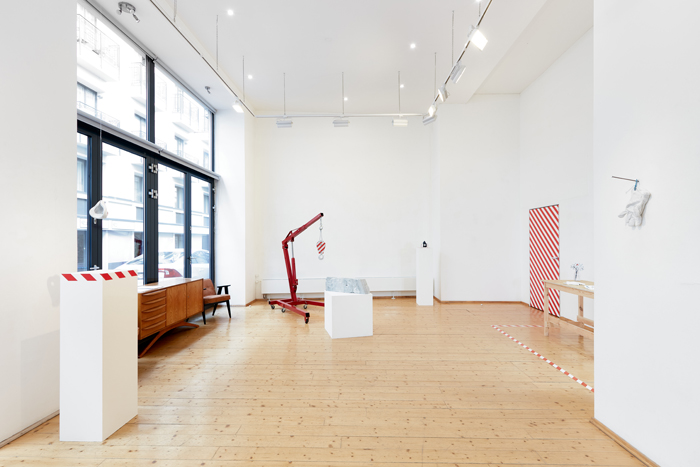
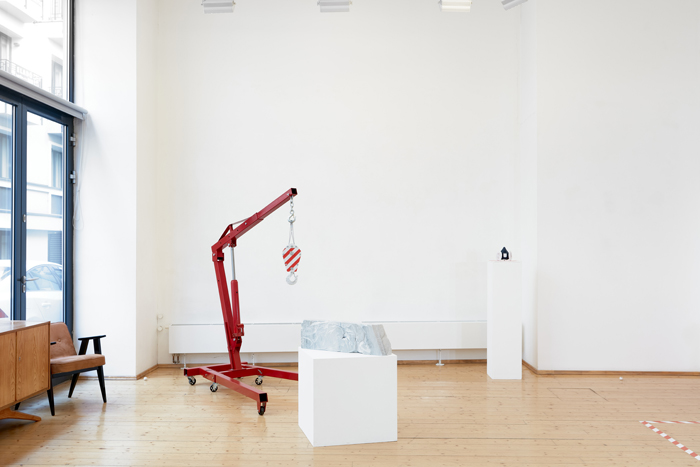
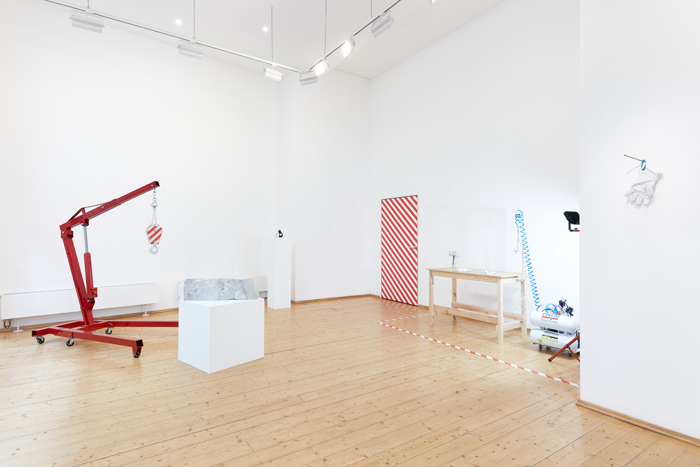
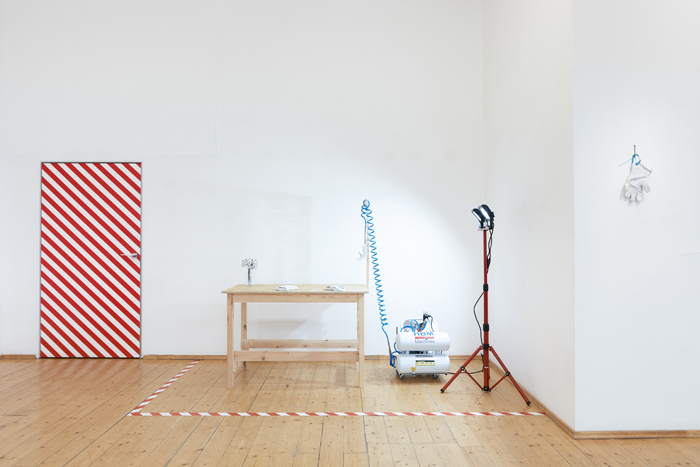
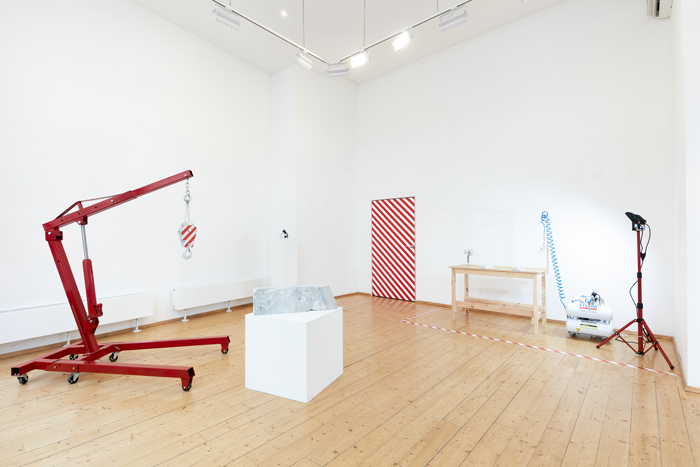
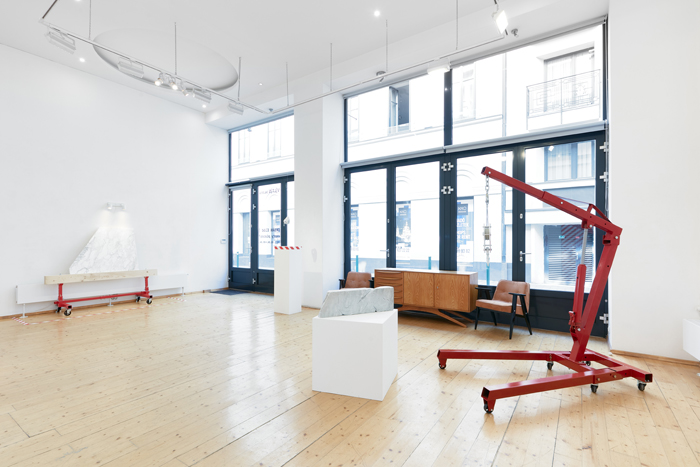
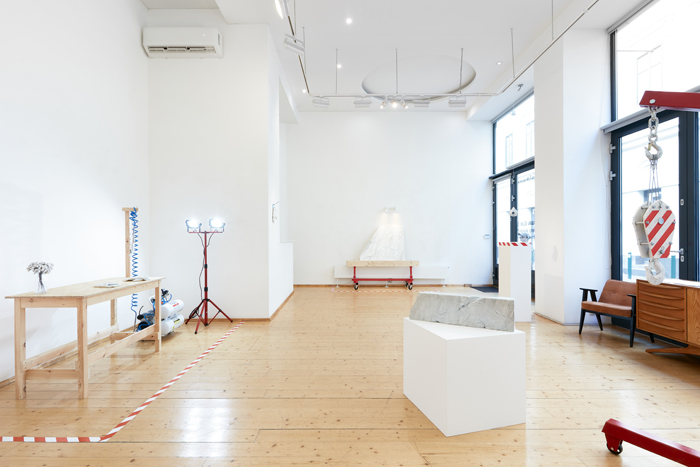
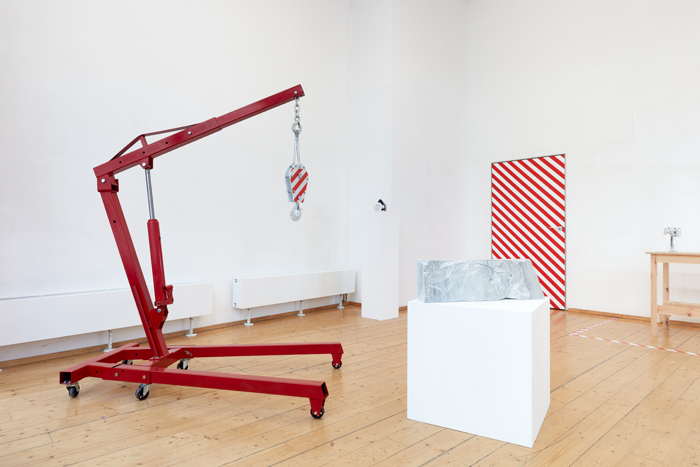
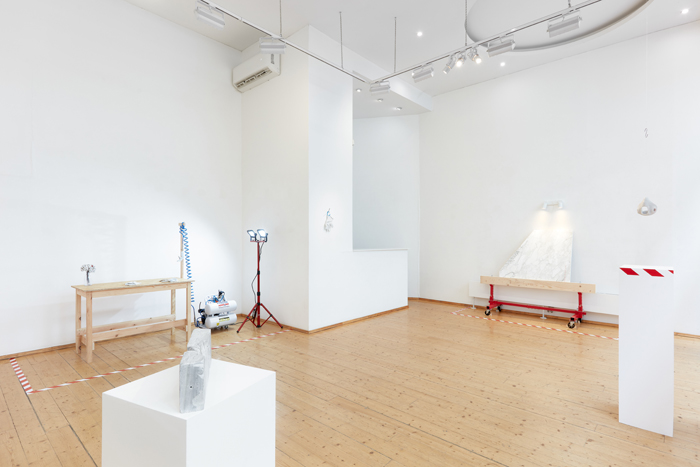
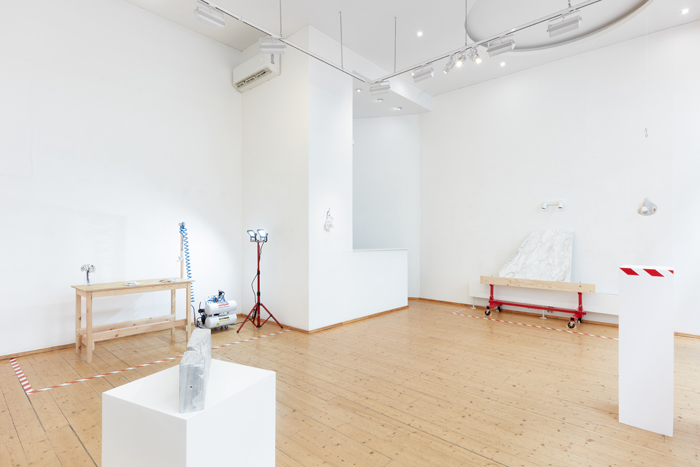
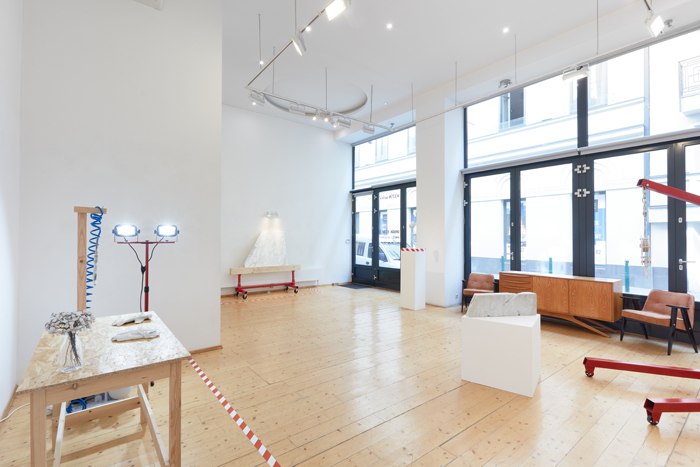
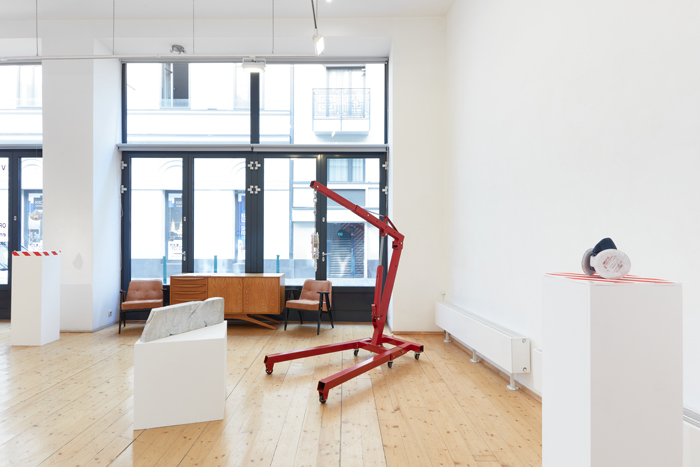
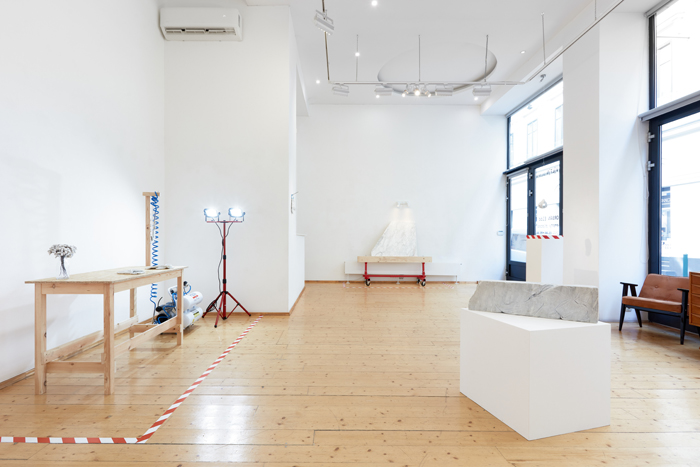
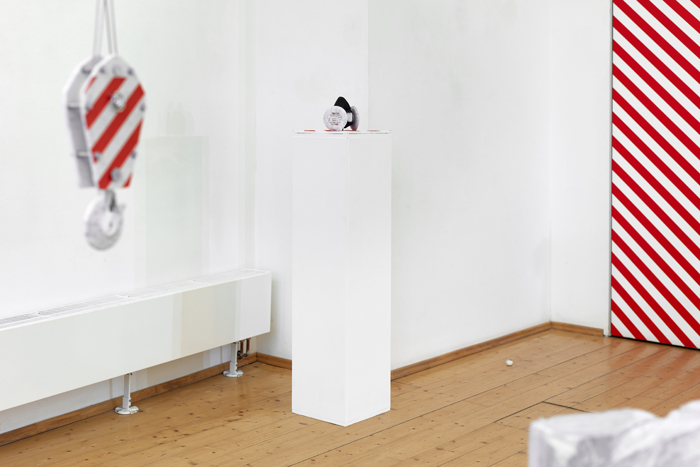
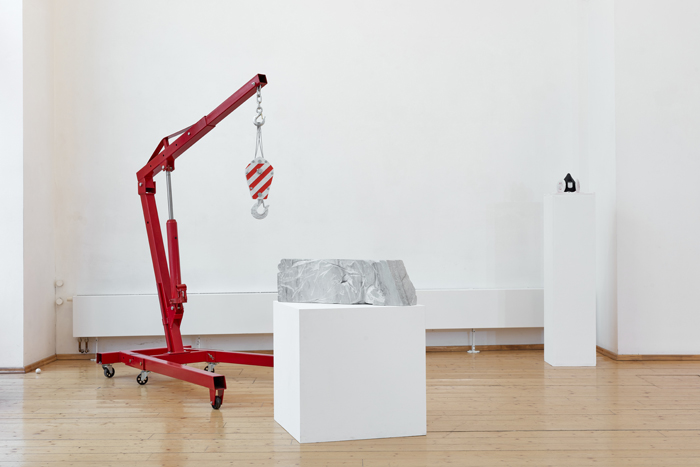
Előd ORBÁN's solo show, empty places? also creates tension in the visitors of VILTIN Gallery. The artist, who turned the exhibition space into a studio built his installation through multiple transitions of concept. On one hand the surroundings of the studio, the reconstruction of his working space is put within the gallery. On the other hand, the artist, the absence of the creating human makes the studio impersonal, it cannot be known if he is away for a minute or he left the studio for good and with his demonstrative absence he raises questions regarding his own existence, his own existence's justification.
After the digital revolution almost every sculptural goal can be achieved. With the help of a computer, a laser and high pressure water, as well as 3D printers, with the involvement of industrial appliances the most extreme compositions can be impersonally created.
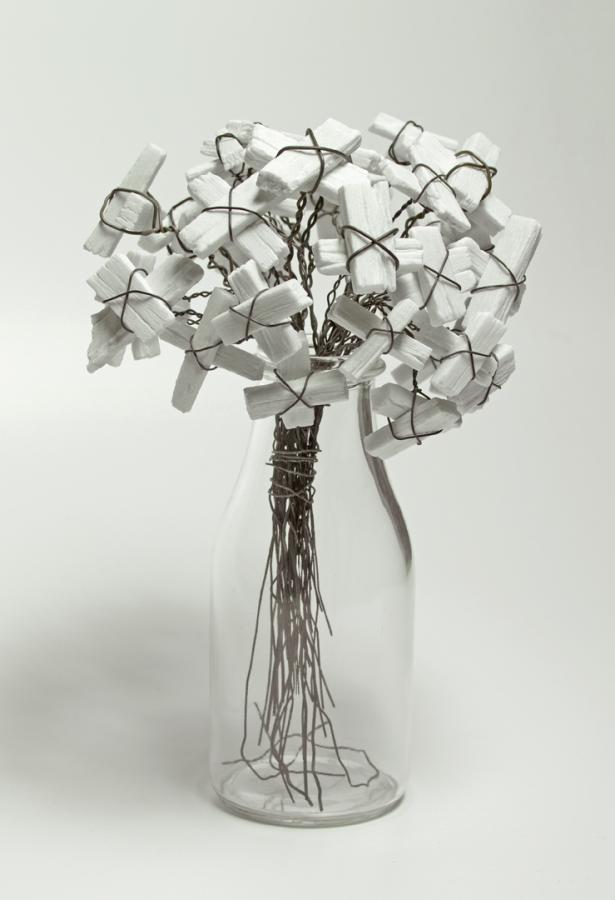
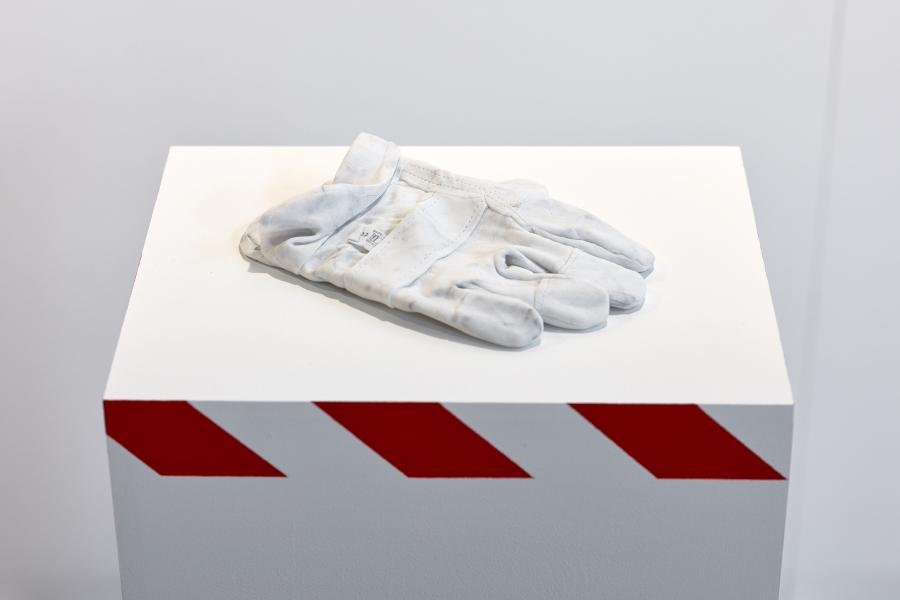
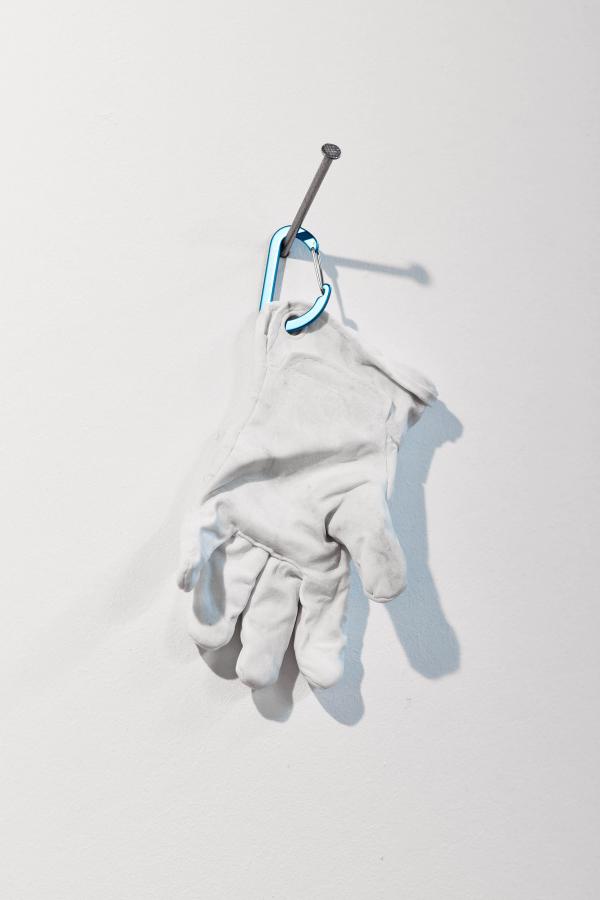
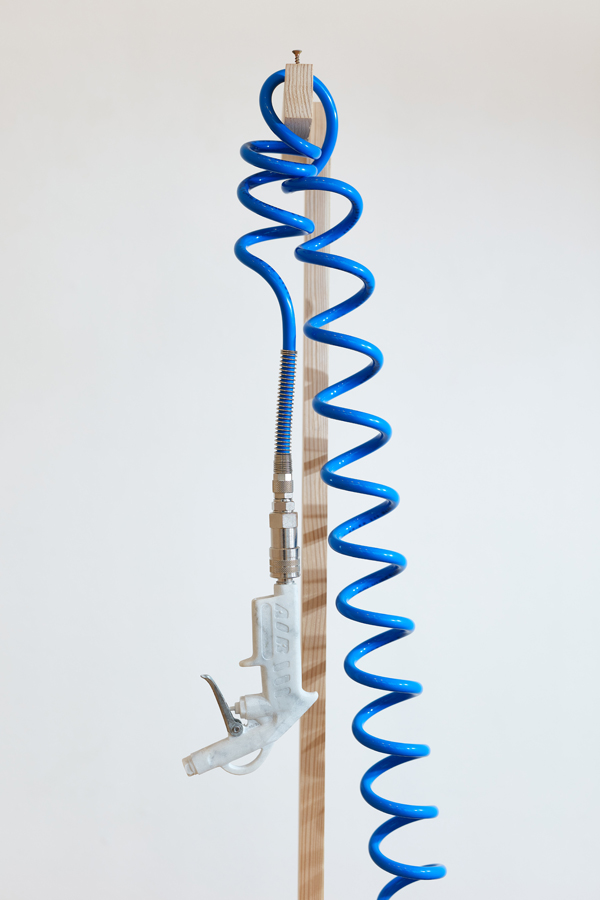
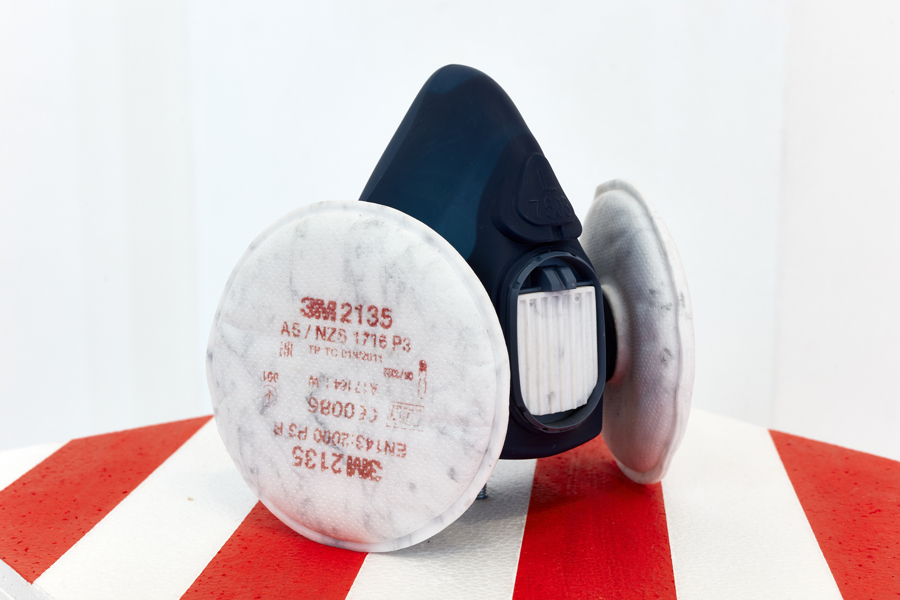
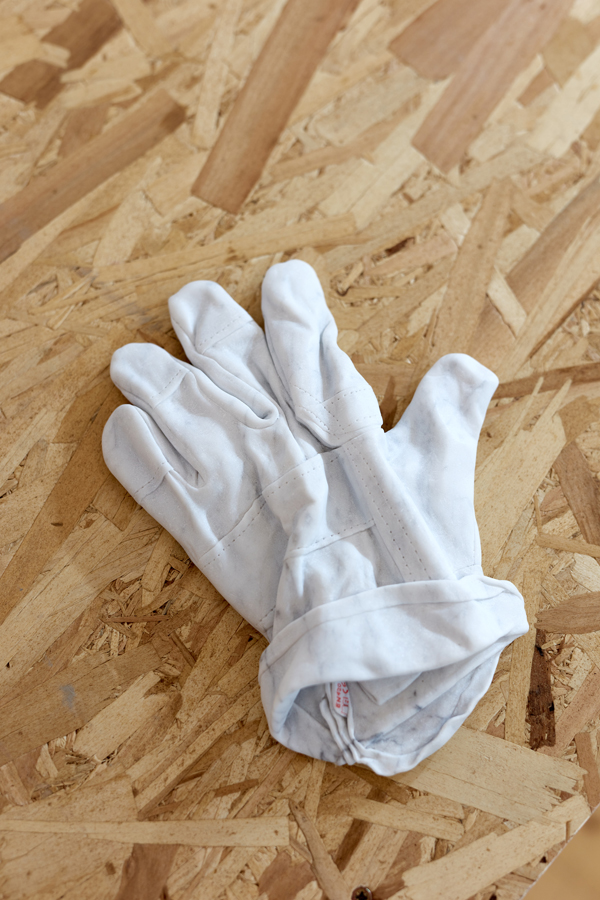
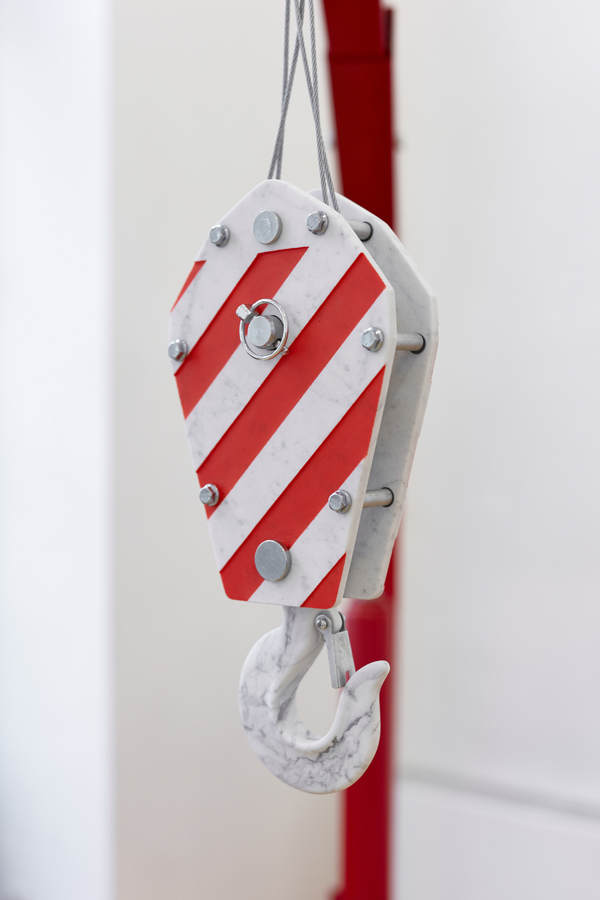
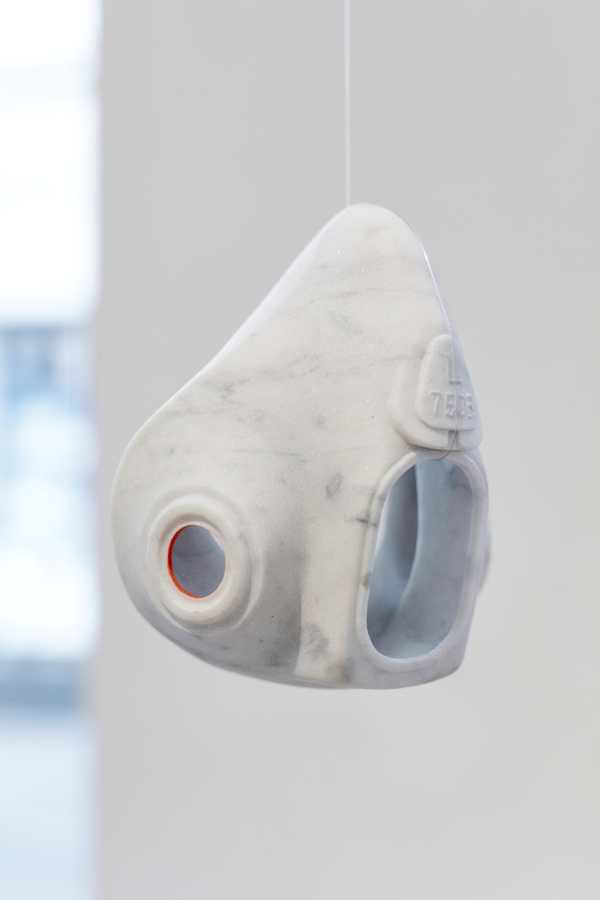
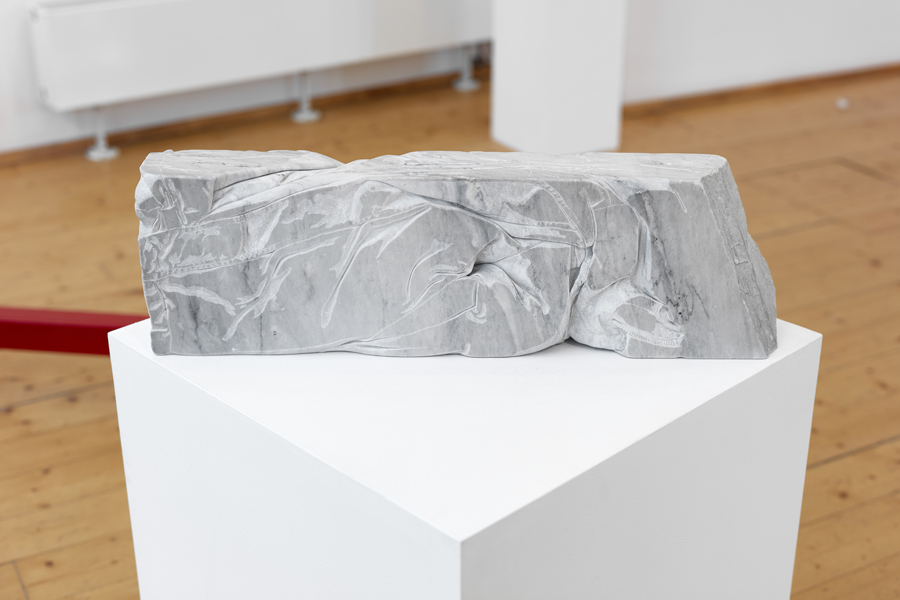
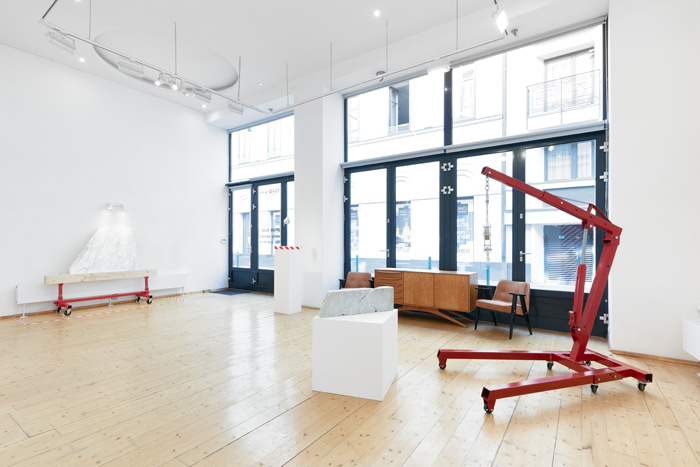
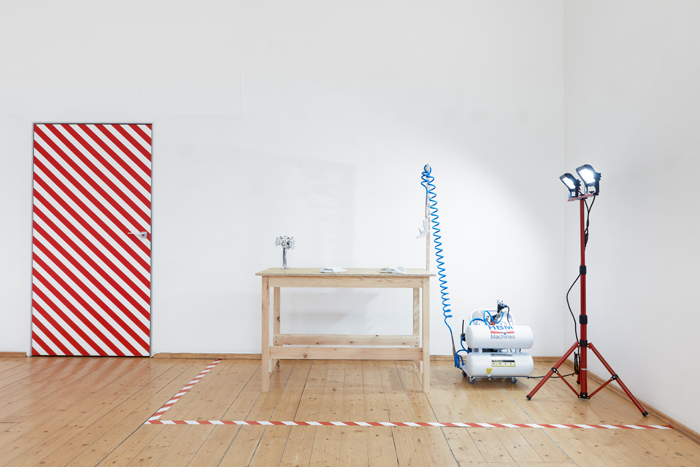
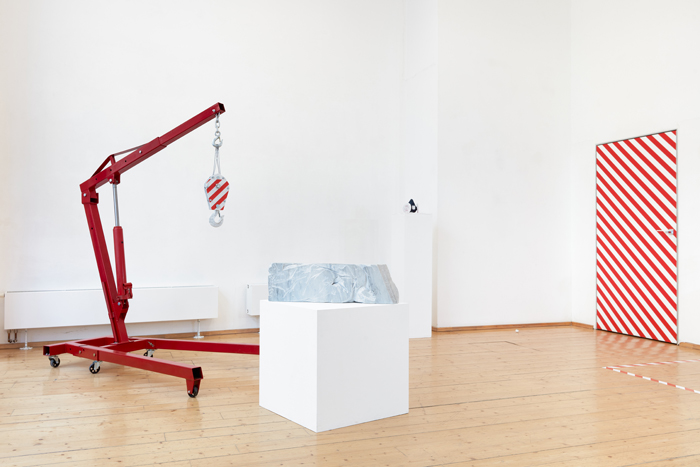
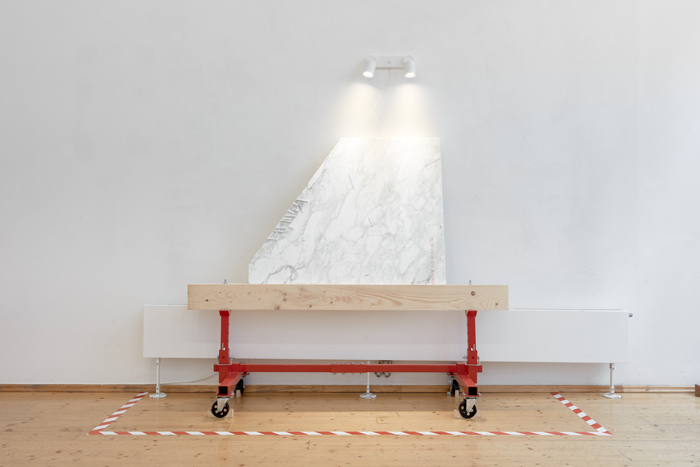
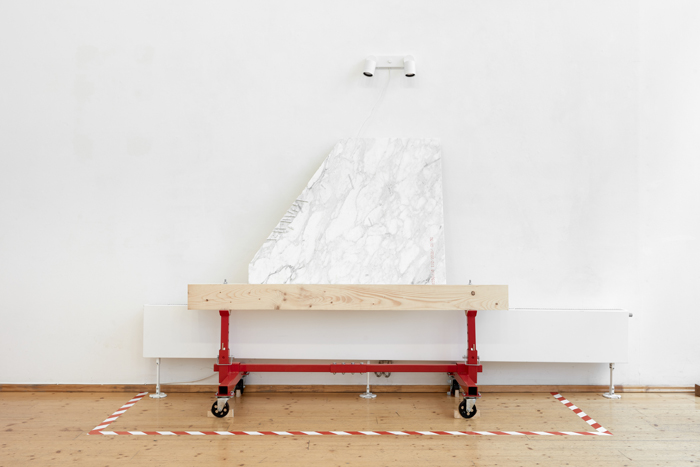
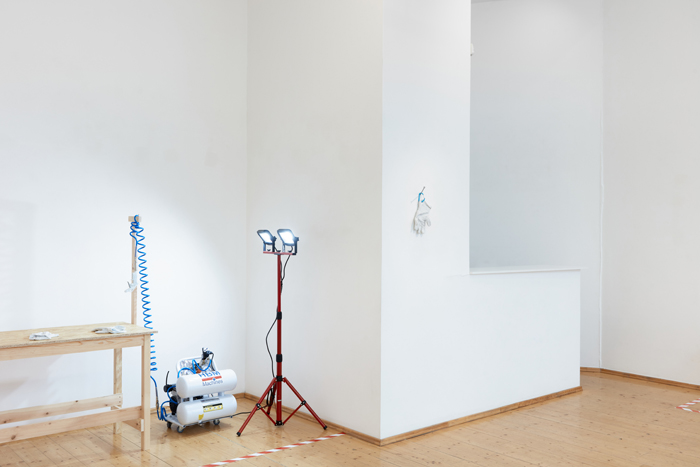
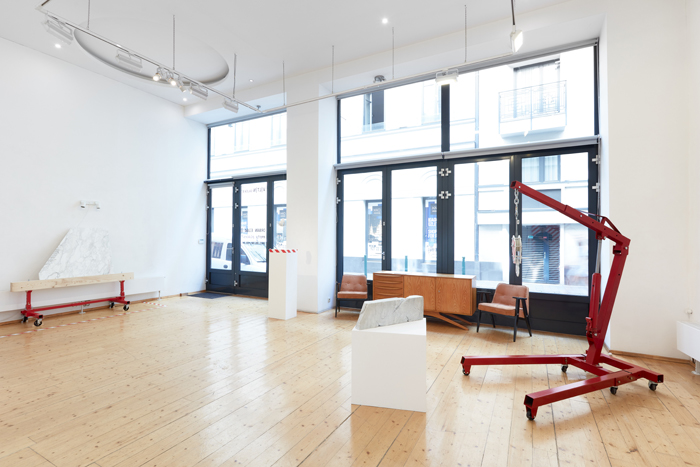
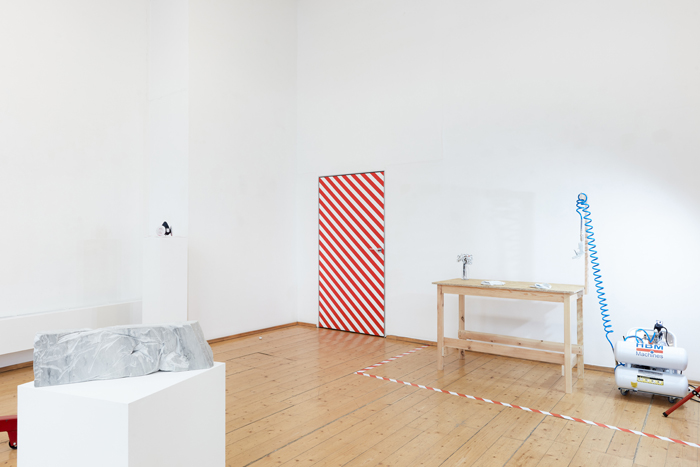
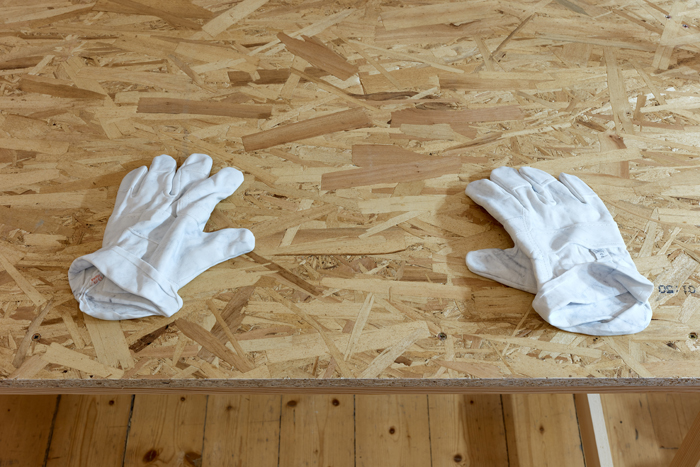
The visitor can occupy the exhibition space, but not the space of creation, therefor an interaction cannot arise between them and the objects, moreover the artist separates the work tools of the studio, his tools from the visitor by red-white warning tape. Hence the spectator feels a deeper urge to examine the artworks closer, only then they can realize that the parts of the artworks are made of marble. This noble and fragile sculptural matter prostheses make the objects functionless, unable to work, the presence of the artist would be futile; he could not create. Realisingthis fact, the metaphysical drama of the abandoned space grows. The object that seem to be machines from far, such as the hydraulic crane, the dust mask with filter and the work glove become artworks, hence their untouchability the gallery almost becomes a museum. The interior of VILTIN can be seen from the outside, which become a tool of expression in the hands of Előd ORBÁN, looking in from outside the exhibition space manifests into a diorama a well known feature of the nation history museums.
ORBÁN's artistic practice recalls the Renaissance and 19th Century Classicism, that can be found in his usage of materials and tools. His choice of material is marble, this progressive, yet lately unnoticed material is called overwhelming, cold, yet capable of lyrical universal expression. Besides the usage of chisel and hammer there are pneumatic chisels and electric buffers. Yet after the fourth industrial revolution, from the hands of ORBÁN the sculptural works that arise are deep and detailed to the core. When the issues of human existence stand on a borderline of new paradigms, and the believers of post-humanism raise their voices more often because they are redefining a possible and not so far future?s moral, cultural, philosophical, technological and political, industrial, and medical reasons.
'The exhibition's background of notion is based on the absence of human presence and the artistic and everyday existences aspect of these chain of causations. My works raise questions again. I am looking for answers how the human absence changes and makes the studios as well as fine art impersonal. Is work still necessary or the personal presence, how does a studio became unpurposeful if we take the humane out of it? Doesn't it become an isolated and incomprehensible apace, a lit museum vitrine, that we don't know the meaning of it system of rules? Can it be maintained if we take the human out of it? The system of relation of the sculptures are constantly changing, but they symbolize the human throughout. The human, who exists between the things, but doesn't arise above them? -according to the artist.